

Robotaxis are hitting speed bumps when it comes to public acceptance and urban integration.
Imagine stepping into the future of transportation, where your daily commute is transformed by the touch of a button. A driverless minivan arrives at your doorstep, greeting you by name as you enter a world where technology reigns supreme at the wheel.
Welcome to the era of robotaxis, where autonomous vehicles (AVs) promise to transform our daily commutes and redefine urban mobility. Already making headway in U.S. cities like Phoenix and San Francisco, and gaining momentum in Chinese metropolises such as Shanghai and Beijing, robotaxis are spearheaded by innovators like Cruise, Waymo and Baidu.
The bright side of robotaxis
At the heart of the robotaxi revolution lies a promise of significant cost savings for cab operators. Eliminating the need for human drivers reduces labor expenses, including wages, benefits and compliance costs. But the benefits extend beyond mere economics. Unmanned robotaxis offer an unparalleled level of predictability and reliability, free from human fatigue and distractions. Their advanced machine-learning algorithms and sensors navigate complex urban landscapes with precision, promising to dramatically improve road safety by potentially reducing traffic fatalities due to human errors by up to 90%, as noted by the National Center for Biotechnology Information (NCBI).

Image by Aron Urb via Wikimedia Commons
Furthermore, robotaxis are poised to redefine urban travel through shared services. By optimizing routes and pooling passengers, such driverless mobility solution can reduce the overall number of vehicles on our roads. This not only increases the efficiency of transportation systems but also plays a crucial role in environmental sustainability by reducing emissions.
What are the challenges facing the robotaxi industry?
Despite the clear benefits and considerable investments from industry giants such as Cruise and Waymo in the U.S., Baidu and AutoX in China and France’s EasyMile, the widespread adoption of robotaxis still confronts numerous challenges. These challenges span various domains, including regulatory, technological and societal aspects.
Urban traffic woes and reliability concerns

Image by Cruise
Cities already burdened with traffic congestion initially saw robotaxis as a potential solution. However, recent developments suggest that robotaxis might inadvertently contribute to the problem. A notable incident occurred in August 2023 when ten Cruise robotaxis, part of a venture by General Motors and Honda, became immobilized in San Francisco’s North Beach area, leading to widespread traffic blockages.
Cruise pointed to disruptions caused by a nearby festival, which they claimed interfered with the robotaxis’ wireless connections. However, this incident wasn’t isolated. Between May and December 2022, San Francisco reported over 92 instances where Cruise’s driverless cars abruptly stopped, causing significant traffic disruptions and safety hazards. The frequency of such incidents has intensified skepticism about the practicality and reliability of robotaxis in urban environments.
Regulatory roadblocks for autonomous vehicles
The journey of autonomous vehicles (AVs), such as robotaxis, through the urban landscape is entangled in a complex web of regulatory challenges. Generally, the federal government oversees vehicle safety and design, while state authorities handle driver-related aspects such as licensing, insurance and liability. However, AVs, with their advanced technology and lack of conventional controls like steering wheels or pedals, as exemplified by models like Cruise’s Origin robotaxi, disrupt these established regulatory norms.
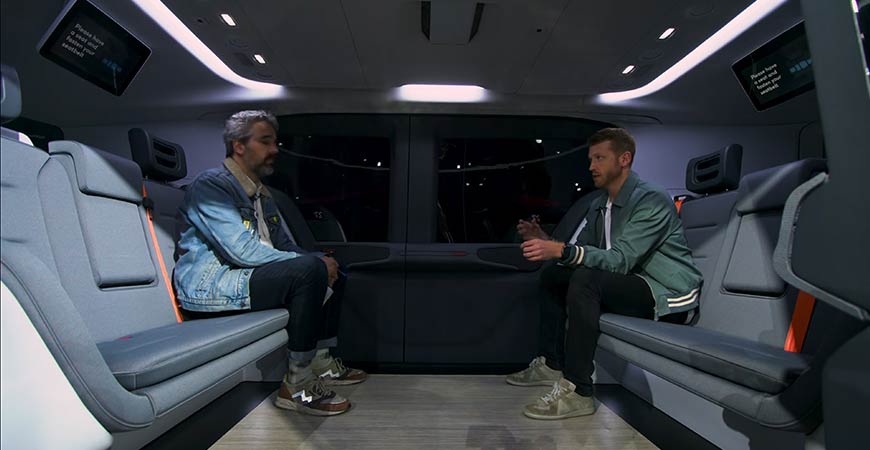
A screenshot from The Verge’s video on YouTube
Also, since operational oversight of AVs often falls to state agencies, it leads to tensions with city-level authorities. Cities like San Francisco have faced difficulties due to limited control over robotaxis, compounded by incidents that question their safety and reliability.
Adding to the complexity, there’s an ongoing debate in the U.S. about the scale of testing and commercialization of self-driving cars. Current federal regulations cap the testing of AVs at 2,500 vehicles per company, subject to approval by the National Highway Traffic Safety Administration (NHTSA).
This limitation is seen by many in the industry as a barrier to technological advancement. Efforts to pass new legislation that would allow for increased testing and deployment of AVs without strict adherence to some existing AV safety standards have been met with both support and challenges, reflecting diverse opinions on how best to regulate this emerging technology. This law, originally proposed in 2017, passed in the House of Representatives but faced challenges in the Senate.
Building consumer trust
Apart from regulatory hurdles, the journey towards public acceptance of robotaxis faces significant challenges, particularly in the realm of safety and transparency. A survey by S&P Global Mobility in spring 2023 found that less than half of the people were open to riding in or buying a self-driving car.
Cruise’s recent suspension by the California DMV, following an incident where a robotaxi severely injured a pedestrian, has intensified safety concerns. This incident led to Cruise pausing its fleet and raised serious questions about its technology’s safety and transparency. Reports from The Verge suggest that Cruise might have withheld important information from the DMV, exacerbating public skepticism about the safety of entrusting autonomous vehicles with human lives.
Further complicating the issue of trust are recent findings about the frequency of human intervention in Cruise’s operations. The New York Times reported that Cruise employees had to intervene in the company’s vehicles as frequently as every 2.5 to five miles. This level of human involvement challenges the notion of these vehicles being fully autonomous and raises questions about the economic sustainability of such services.
With consumer confidence in autonomous technology declining, the emphasis on transparency and reliable performance becomes critical. Ensuring public trust in robotaxis requires not just advanced technology but also robust legal and regulatory frameworks that guarantee safety and accountability. Without these, the path forward for robotaxis remains rocky.
Moving forward
The future success of robotaxis depends not only on developing the technology but also on clear communication and cooperation between companies, government bodies and the public. Establishing strong safety standards and regulations, along with transparent information about these vehicles’ capabilities and limitations, is key to making people feel more confident about using robotaxis.
Also read:
- Risks Posed by Self-Driving Vehicles
- Exploring Next-Gen Mobility: Hyperloop Marvels to Flying Taxis
- Top Micro-Mobility Startups Revolutionizing Urban Transportation
Header Image by Storyset on Freepik