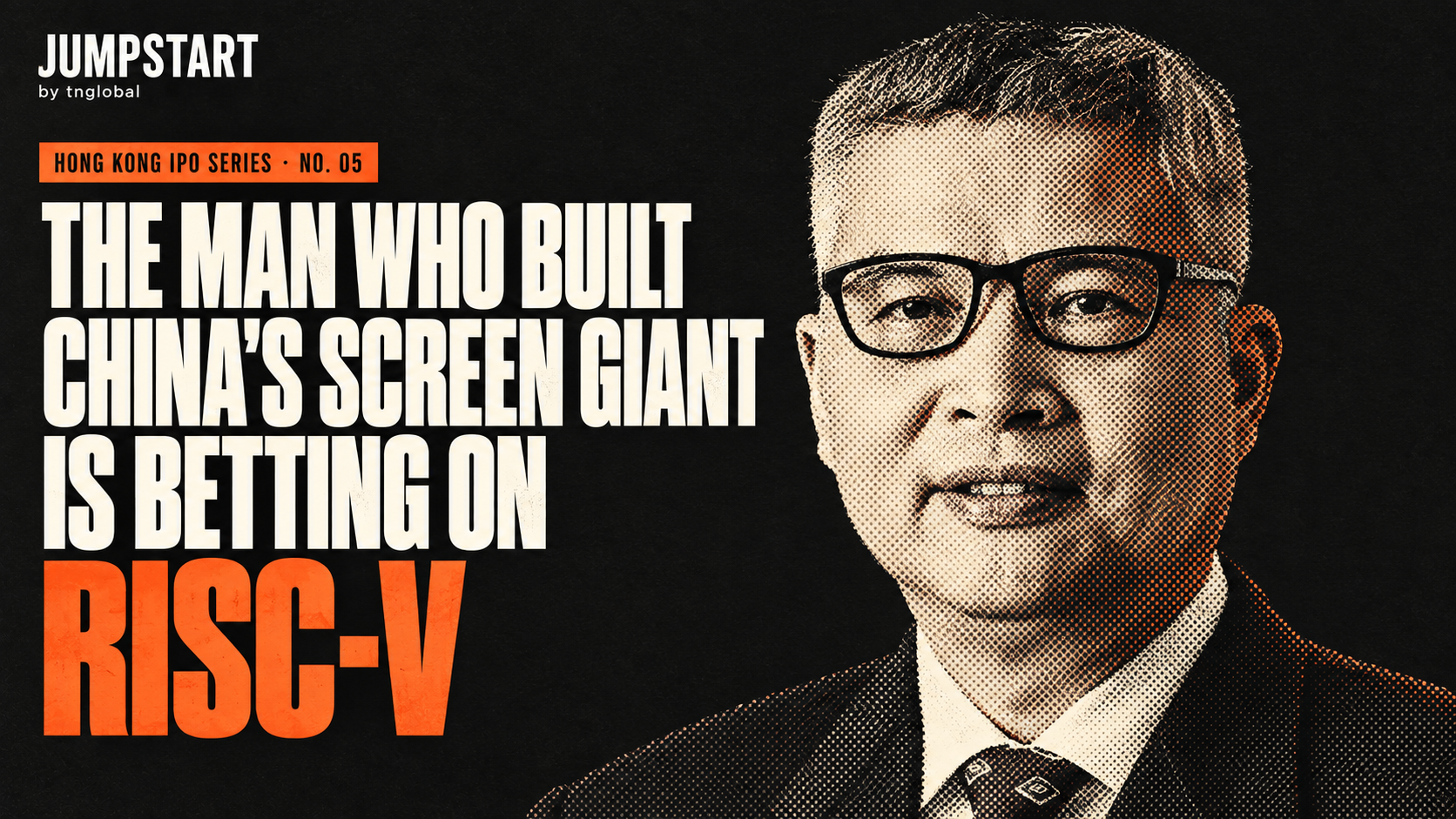

Wang Dongsheng has already spent one career proving that a Chinese company could compete in one of the technology industry’s most capital-intensive businesses.
In 1993, he led the creation of BOE, the display manufacturer that would grow into one of the world’s largest producers of screens. BOE supplied the panels through which hundreds of millions of people encountered televisions, laptops and smartphones—even when they never saw its name.
Wang left the company’s chairmanship in 2019. At 62, an age when many founders would have stepped away from industrial risk, he started again.
His second act is ESWIN Computing, a Beijing chip company organized around RISC-V, the open instruction-set architecture attracting developers across embedded devices, automobiles, robotics and artificial intelligence. ESWIN is now preparing to list in Hong Kong, offering 1.57 billion H shares at between HK$1.48 and HK$1.59 each. Trading is expected to begin on October 9 under stock code 1256, according to its prospectus.
The comparison with BOE is tempting. Both companies emerged from moments when Chinese manufacturers wanted more control over a foundational layer of the electronics industry. Both required large, sustained investment before scale could improve their economics. Both were shaped by Wang’s belief that an industrial platform matters more than a single product.
But ESWIN is not yet the BOE of RISC-V. Most of its revenue still comes from chips that manage displays and touch interactions. It remains heavily lossmaking, depends on a small group of customers and is attempting to expand into several difficult markets at once.
That tension makes the company more interesting than its listing labels suggest. ESWIN’s Hong Kong offering is not simply a bet on an open chip architecture. It is a test of whether expertise accumulated around screens can become the foundation for a broader computing business—and whether Wang can repeat the logic of his first industrial transformation in a much less forgiving market.
The Industrialist Behind the Screen
To understand ESWIN, it helps to understand what Wang built before it.
BOE was founded in Beijing in 1993, when China’s electronics industry remained dependent on imported display technology and manufacturing equipment. Wang served as chairman and chief executive from the company’s creation until 2016, then remained chairman until his term ended in June 2019.
Display manufacturing is a business of scale, precision and punishing capital expenditure. A new production line can cost billions of dollars. Technical generations turn over quickly, and the value of a panel tends to decline as manufacturing improves. Competitors must finance the next factory before the previous one has fully paid for itself.
BOE survived that cycle and became a global display supplier. The experience appears to have shaped Wang’s view of technology companies: individual components matter, but the deeper objective is to assemble talent, intellectual property, manufacturing relationships and customers into a platform capable of surviving several product generations.
ESWIN Group was created in 2019 around that platform idea. Its semiconductor activities were separated into businesses covering chip products, 12-inch silicon wafers, board-level packaging and testing, and display-driver packaging and testing. ESWIN Computing took the chip-product business that had begun operating under a predecessor organization in 2018.
This distinction is important. ESWIN Computing does not manufacture wafers or package every chip it sells. It operates largely as a fabless company: it researches and designs chips, chipsets and circuit boards, develops the software required to use them, and relies on third parties for fabrication, packaging and testing.
The company was formally established in Beijing in September 2019. It also created a central research institute to work on RISC-V computing architecture, high-speed interfaces and reusable intellectual-property modules. Wang initially served as chairman. Mi Peng, who joined as chief financial officer in 2019, is now chairman and chief executive, while Wang remains an executive director and chairs the strategy and investment committee.
Other senior figures point to the kind of organization ESWIN wanted to build. Vice chairman Wang Bo spent almost 24 years at Intel, most recently as a product director. The broader technical team includes veterans of chip design, displays, connectivity and computing.
Rather than begin with one flagship processor, ESWIN accumulated a library. As of March 2026, it reported more than 620 IP modules, over 20 series of RISC-V cores and more than 1,740 patent applications incorporated across its products. It had commercialized over 150 hardware-software products and served 220 customers during the reporting period covered by its prospectus.
This breadth is both the company’s proposition and its first complication.
What RISC-V Actually Opens
RISC-V—pronounced “risk five”—is not a chip. It is an instruction-set architecture, or ISA: the basic vocabulary and rules that allow software to tell a processor what to do.
For decades, most personal computers and data-center processors have been built around the x86 instruction sets associated with Intel and AMD, while smartphones and countless embedded devices rely on architectures licensed from Arm. Chip designers can build their own processors around those systems, but they operate within commercially controlled ecosystems.
RISC-V is an open, royalty-free standard. Its core specifications can be used by companies, universities and developers to design processors without paying for the instruction set itself. The architecture is modular, allowing designers to begin with a relatively small base and add capabilities required for a specific product.
Open does not mean that every RISC-V chip must be open source. A company can use the public instruction set while keeping its processor design, specialized modules and software proprietary. The value of the standard is that it gives designers more freedom to customize hardware without abandoning a common software target.
That makes RISC-V particularly attractive for devices that sit outside the conventional PC and smartphone categories. A car controller, industrial sensor, storage appliance or robot may need a different balance of performance, power consumption, cost and real-time responsiveness. Developers can tailor a processor around those needs while reusing tools and software developed across the wider RISC-V ecosystem.
The difficult part is everything beyond the specification. A commercially useful chip needs verified processor cores, interfaces, compilers, operating systems, development tools, application software, documentation and engineers who can help customers integrate it. An architecture becomes powerful only when enough of that surrounding ecosystem exists.
ESWIN is trying to occupy the layer between the open standard and the finished device. It develops RISC-V cores and reusable IP, combines them with other processing and connectivity functions, packages those elements into chips or boards, and supplies the software required to make them work in particular applications.
The company calls its development environment RISAA. The platform is designed to let teams reuse hardware and software modules rather than begin each product from zero. ESWIN can sell finished products, customize them for major customers or license individual IP blocks to companies developing their own chips.
In theory, this creates a compounding advantage. Each project adds technology that can be reused in the next one, reducing development time and spreading research costs across a larger range of products. In practice, the benefits arrive only if enough customers choose the platform—and if the company can prevent its product range from becoming an expensive collection of unrelated projects.
The Display Business Paying for the Future
Despite its RISC-V positioning, ESWIN’s present business remains closely connected to Wang’s previous industry.
The company’s largest product group consists of human-machine interaction chips. These components sit inside televisions, monitors, laptops, smartphones and watches. Timing controllers organize the flow of image data toward a display. Touch controllers translate a finger’s movement into commands. Other chips manage power or help display drivers turn electronic signals into visible pixels.
These are rarely the parts advertised to consumers, but a screen cannot function without them. The display supply chain also gave ESWIN a ready set of engineering problems and customer relationships. In 2025, the company was China’s largest domestic provider of human-machine interaction chips for smart devices by revenue, according to market research commissioned for the prospectus.
Human-machine interaction products generated RMB1.86 billion in 2025, or 76.3% of ESWIN’s total revenue. Multimedia-processing chips—including television system-on-chips, monitor scalers and Mini-LED or Micro-LED controllers—added another 6.2%.
Together, screen-related products accounted for more than four-fifths of the business. They are not a historical footnote. They are the revenue base supporting ESWIN’s expansion.
The company has continued to develop that base. In 2025, a leading monitor manufacturer began mass production of a RISC-V multimedia controller supplied by ESWIN. Its OLED display-driver chip was adopted by a leading smartphone manufacturer. These products show how RISC-V can be introduced inside familiar devices, often in control functions invisible to the user.
They also reveal the limit of describing ESWIN as a computing startup. Its commercial strength was built around displays, an industry in which Wang already understood the technology, customers and supply chain. The more ambitious parts of the story are newer.
From Screens to Machines That Act
ESWIN divides its growth products into interconnectivity and computing.
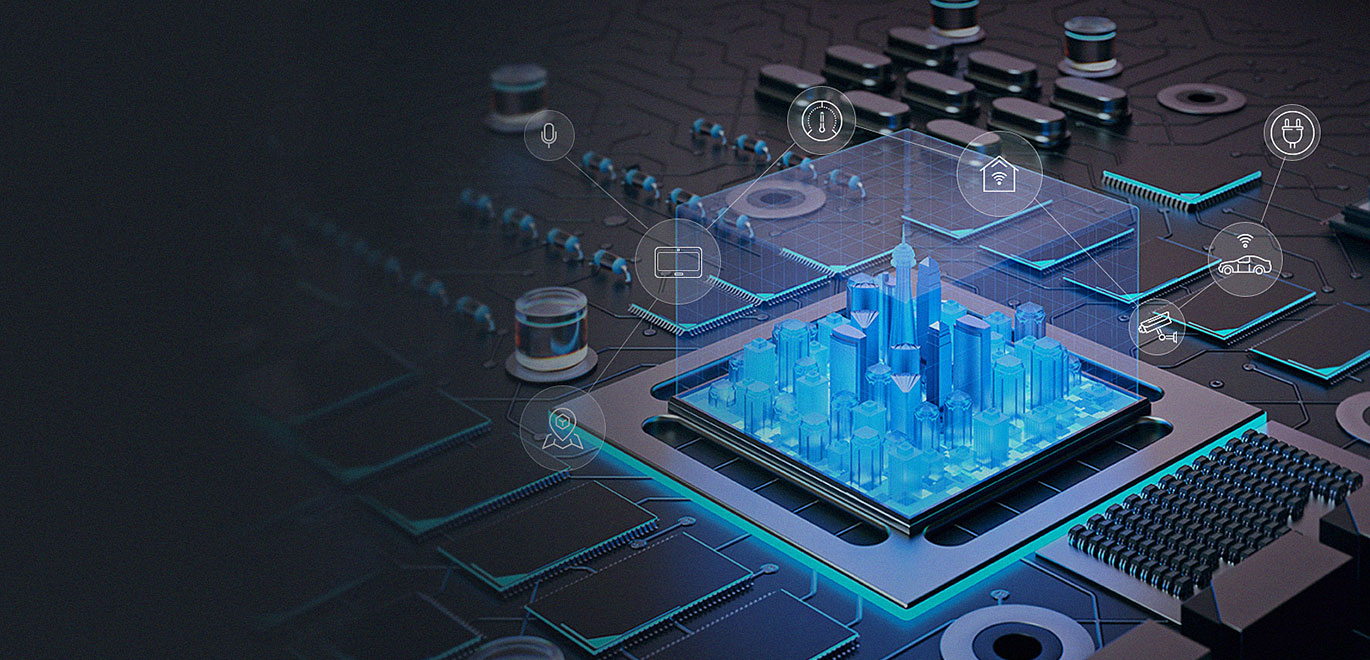
Interconnectivity products allow vehicles, robots and industrial equipment to transmit and receive data through Wi-Fi, Bluetooth and cellular networks. Computing products range from microcontrollers that manage a limited set of operations to AI systems-on-chips capable of processing sensor data and making decisions locally.
The company groups these markets under “embodied intelligence,” an industry term for machines that sense and act in the physical world. In practical terms, this includes cars coordinating electronic systems, robots interpreting their surroundings and industrial equipment responding to real-time conditions.
ESWIN began emphasizing edge and automotive products in 2021. It delivered its first 32-bit RISC-V IP that year and a 64-bit version in 2023. Its automotive development program followed in 2022. By 2025, a RISC-V microcontroller had entered mass production with an automotive-parts supplier and a vehicle manufacturer.
The company has moved further into computing through boards and systems. Its products now span edge-computing chips, multi-purpose computing hardware and video-transcoding cards. In 2026, it began developing a high-performance RISC-V AI system-on-chip for large-model inference. Another RISC-V AI chip was adopted by a consumer-storage manufacturer for personal-storage products.
The financial statements suggest that this activity is beginning to matter. Computing products generated only RMB375,000 in 2023. Revenue rose to RMB72.3 million in 2024 and RMB319.8 million in 2025, reaching 13.2% of the company total.
During the first three months of 2026, computing revenue reached RMB223 million, almost half of quarterly sales. That number should be treated carefully: large system projects can make one quarter look very different from the next. It nevertheless shows why ESWIN wants investors to view it as more than a display-chip supplier.
The transition is not a conventional pivot. ESWIN has not abandoned screens to chase AI. It is attempting to reuse the same platform—processor cores, interfaces, software and supply-chain relationships—across devices that require more connectivity and local computing.
The question is whether that reuse is technically and economically real. A timing controller for a monitor, an automotive microcontroller and an inference chip operate under very different requirements. Shared architecture can lower part of the development burden, but every market still demands specialized engineering, qualification and customer support.
The Cost of Building Before Scale
ESWIN’s revenue has grown steadily. It rose from RMB1.75 billion in 2023 to RMB2.03 billion in 2024 and RMB2.43 billion in 2025. Gross margin improved from 15.4% to 18.6% over the same period.
The company remains far from profitable.
ESWIN lost RMB1.84 billion in 2023, RMB1.55 billion in 2024 and RMB1.52 billion in 2025. It lost a further RMB374.9 million during the first quarter of 2026 and says it expects losses to continue for the foreseeable future.
Research and development explains much of the gap. R&D expense reached RMB1.44 billion in 2023—more than 80% of revenue that year—and remained above RMB1 billion in 2025. Administrative and sales expenses add another layer of cost, while new products require investment long before they produce meaningful volume.
This is where comparisons with BOE become useful and dangerous at the same time. Both displays and chips reward patient investment, but they scale differently. A panel factory can produce large volumes of relatively standardized output once capacity is installed. A chip-platform company must repeatedly persuade customers to design its technology into products, then maintain software and engineering support across many applications.
ESWIN argues that reuse will gradually improve the economics. Once a processor core, interface or software module has been developed and verified, it can be incorporated into several products. Higher shipment volumes can spread tape-out, software and support costs across more units. Customized projects can also create reusable modules for later customers.
There are signs of improvement. Adjusted net loss narrowed from RMB1.70 billion in 2023 to RMB1.16 billion in 2025, after excluding share-based payments and listing expenses. Gross profit rose each year. But ESWIN is still spending ahead of the scale required to support its platform.
The Hong Kong offering will extend that runway. At the midpoint of its price range, the company expects approximately HK$2.27 billion in net proceeds. It plans to allocate 35% to developing and updating chip products, 30% to the RISAA hardware-software platform, 15% to potential acquisitions, 10% to marketing and the RISC-V ecosystem, and 10% to working capital.
That allocation makes the purpose of the listing unusually clear: investors are being asked to finance more platform before the existing platform has reached profitability.
The Customer Behind the Concentration
ESWIN’s revenue base is not only concentrated by product. It is concentrated by customer.
The five largest customers generated 89.5% of revenue in 2025. The largest alone contributed 64.6%, although that was down from 82.1% in 2023. During the first quarter of 2026, the largest customer’s share fell to 39.3% as computing revenue expanded.
Such concentration is common when a young chip supplier wins a high-volume design with a major electronics manufacturer. It can accelerate growth because one successful product reaches millions of devices. It also gives the customer significant influence over pricing, inventory and the timing of orders.
ESWIN’s prospectus does not identify its largest customer by name. It describes the company as a Shenzhen-listed provider of intelligent interface products and professional services that buys mainly human-machine interaction chips for televisions, monitors and smartphones.
The relationship places ESWIN’s BOE heritage in the background even when the customer remains anonymous. Wang’s industry experience made it possible to begin with a market the company understood. The long-term test is whether ESWIN can build a customer base that no longer depends so heavily on any one display ecosystem.
Inventory creates a related risk. Net inventory rose from RMB328.6 million at the end of 2023 to RMB780.1 million by March 2026 as the company prepared for new products and anticipated demand. Earlier-generation connectivity products had already required substantial write-downs. In chips, preparing too little inventory can mean missing a customer launch; preparing too much can leave expensive components obsolete.
The platform strategy is meant to diversify both products and customers. It will succeed only if the newer automotive, robotics, industrial and computing products move from technical milestones into repeatable sales.
A Second Industrial Bet
Wang Dongsheng’s first major company helped shift the geography of display manufacturing. ESWIN is attempting something less visible and potentially broader: building reusable computing technology that can appear inside many categories of machines.
RISC-V gives the company an opening. The architecture lowers one barrier to processor design and offers customers an alternative to proprietary instruction sets. It does not remove the harder barriers—software, verification, manufacturing, customer trust and the enormous cost of sustaining a product roadmap.
ESWIN has assembled many of the necessary pieces. It has commercial products, large customers, processor cores, a growing IP library and a founder who has already endured one long industrial cycle. Its display business provides revenue and a route into high-volume devices. Its computing products are beginning to change the mix.
It also has the profile of a company still proving the central claim behind its existence. Revenue remains dominated by screen-related chips. Losses remain large. Customer concentration remains high. AI inference, robotics and automotive computing are promising markets, but they are also crowded with established chipmakers and heavily funded startups.
The Hong Kong listing does not resolve those contradictions. It gives ESWIN more time and capital to work through them.
That may be the most revealing connection between Wang’s two companies. BOE was not built through a single technological breakthrough; it was built through repeated investment, manufacturing discipline and the willingness to remain in a difficult industry long enough for scale to matter.
ESWIN is now making a similar argument about computing platforms. The difference is that an open architecture allows many companies to start. Only a few will build enough technology around it to make customers stay.