


Delicious or outrageous? You decide.
In a quest for culinary wonder, social media has whipped up a buffet of unconventional food trends, each more surprising than the last. From mesmerizing burn-away cakes on TikTok to onigiris shaped using sweaty armpits and South Korea’s peculiar fried toothpick trend, the world’s palate for the unusual is expanding—rather rapidly.
Yet, amidst the excitement, these trends prompt a deeper reflection on how we balance the thrill of the new with the essentials of health and safety in our collective taste for the extraordinary. Keep scrolling to discover recent unconventional food trends redefining cuisines and challenging our concepts of what’s edible—and what’s safe.
The burn-away cake: A fiery TikTok trend

Image from Edible Print Supplies
The cake decorating scene on TikTok has been set ablaze by the latest trend: the burn-away cake, which has amassed over 229 million views as of January 2024. This novel cake features printed images or text that, when ignited, vanish to reveal another hidden image below, captivating viewers with its surprise element.
Namaya Navaratnaranjah, who goes by @CakesByNams on TikTok, propelled this trend into the limelight. One of her most famous cakes was inspired by Taylor Swift’s strategic clearing of her social media profiles in 2017 to promote her “Reputation” album.
On January 15, Navaratnaranjah shared a video of a burn-away cake that featured Swift’s empty Instagram page; as it burned away, it revealed a photo from her Eras Tour, all while the song “Look What You Made Me Do” played in the background. This video alone has attracted over 21 million views. Her burn-away cake designs, including tributes to pop culture and personal milestones, have earned her a staggering 19 million likes on TikTok.
But what’s the secret behind these mesmerizing cakes? The first layer is made of edible sugar paper, crafted from vanilla flour, designed to create a dramatic burn-away effect. This paper is carefully placed over a cake design printed with edible ink—a common technique in professional bakeries that achieves a non-flammable decorative layer. Finally, a thick icing border is used to encase the sugar paper to keep the flames contained.
While these cakes are a spectacle, their flammable nature is controlled and lasts only for a limited time; if stored in the fridge too long, the sugar paper becomes too moist to ignite. While safety and edibility are natural concerns with such a fiery display, Tony Park, the CEO of QB Hospitality, assures that the fire risk is minimal, likening it to a candle’s flame.
Ultimately, the burn-away cake’s mix of suspense and wow factor positions it as a lasting trend for events from birthdays to proposals.
2. Sweat-infused riceballs: Redefining ancient culinary techniques?
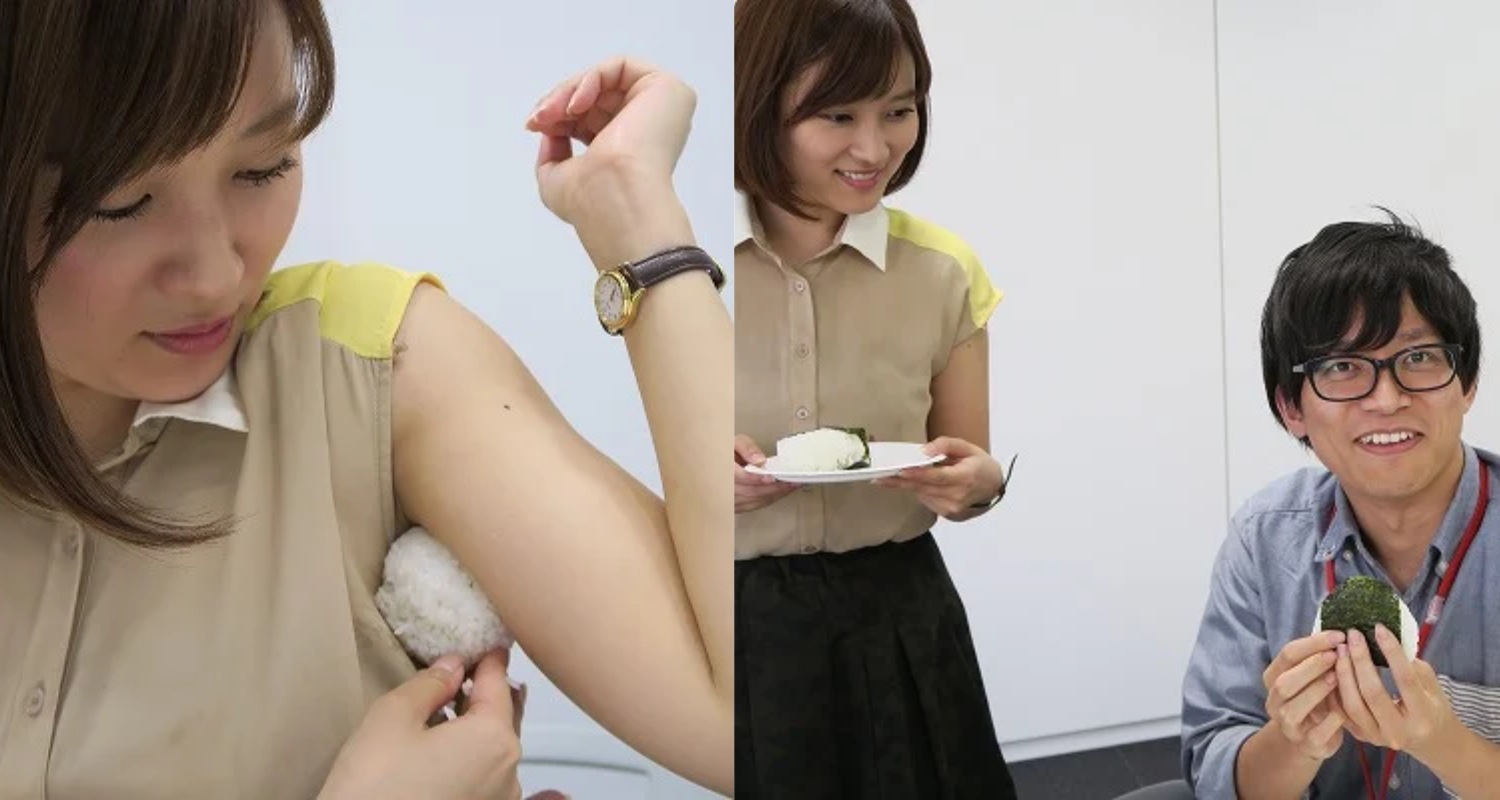
Image from Sirabee
Onigiri, or Japanese rice balls, are traditionally simple yet delicious snacks made from cooked white rice and often wrapped in nori (edible seaweed). Yet, this dish has witnessed an unusual twist on social media. Traditionally shaped by chefs’ hands, one social media trend saw the dish made using sweaty underarms to achieve the iconic triangular shape.
The preparation process is as bizarre as the trend itself. The “chefs” are urged to engage in intense physical activities to sweat—with armpit sweat being preferred over palm sweat. If you’re curious about the taste, consumers report that it is no different from traditional rice balls. Surprisingly, these sweat-infused rice balls are sold at prices ten times higher than a traditional onigiri in Japan.
Although the trend sounds unsettling, the SCMP report states that these women follow high hygiene protocols, disinfecting the area that comes in contact with the food. Additionally, the food itself is disinfected to ensure cleanliness and safety before consumption.
This trend, which started gaining traction in early May 2024, has sparked significant debate and intrigue, according to a report by the South China Morning Post (SCMP). Social media users have had mixed reactions to this sweat-infused Onigiri. One user wrote, “These rice balls can satisfy the taboo desires of a few people; as long as they are hygienic, there is no harm.” Another argued, “It’s unacceptable. What if the chef has a hidden illness? I’d rather eat regular rice balls.”
Is it safe to eat though? Experts warn that sweat, like any other bodily secretion, contains bacteria. Without strict hygiene protocols, such foods can cause food poisoning.
The fried toothpick craze: A viral trend with health hazards

Image from Naver (Blog post)
This is a strange one—buckle up for the ride.
In South Korea, people are posting videos of themselves deep-frying starch-based toothpicks until they resemble curly fries on social media. After achieving this look, they season the toothpicks with powdered cheese and eat them. This trend is not only capturing the attention of social media users but also raising alarms among healthcare professionals.
This trend, which seems to have originated from Korean Mukbang videos—where hosts consume vast quantities of food while interacting with viewers via live stream—has gained traction on platforms like YouTube, Twitter and Instagram since late January 2024.
The toothpicks used are eco-friendly and biodegradable as they are made from materials like sweet potato or corn starch. However, they are not so intended for regular consumption because they contain high levels of food coloring.
Furthermore, local media reports have drawn attention to the use of sorbitol (sugar alcohol) in these toothpicks. Sorbitol is a substance that is generally safe in small quantities, but it can lead to adverse effects such as vomiting, diarrhea and inflammation when consumed in large amounts. Consequently, South Korea’s food ministry has issued a health warning, strongly advising against eating these starchy, fried toothpicks despite their viral popularity.
Balancing curiosity with caution
While some of these unusual food trends showcase the wild creativity of their inventors—like the visually stunning burn-away cakes—others might just leave you scratching your head. Our curiosity can often tempt us to try these trends, especially when they explode across social media. However, it’s important to remember that there’s a big difference between enjoying these trends as visual spectacles and actually indulging in them, which might pose health risks—as with the case of deep-frying starch toothpicks. While intriguing, blindly following such fads can be dangerous. Exploring new food trends can definitely add some fun and excitement to our culinary lives, but we must always prioritize our well-being.
Also read:
- 3 Successful Rebranding Case Studies and the Top Takeaways
- The Top 5 Biggest Flops of Shockvertising
- Are In-App Advertisements Profitable?
Header Image from Freepik