
As demand for hearing care grows, hearing aids are evolving from traditional assistive devices into smarter, more user-friendly consumer electronics. AuyeeSnc, a brand under HK AUYEETEK INNOVATION TECHNOLOGY LIMITED, is seeking to make hearing assistance more accessible to people with perceived mild to moderate hearing loss through in-house audio processing algorithms, touchscreen charging cases, and AI-powered speech translation.
In an interview, the company’s founder, Jason Wang, said AuyeeSnc primarily targets middle-aged and older adults, as well as first-time hearing aid users seeking more affordable and accessible hearing assistance.
Turning the charging case into a control center
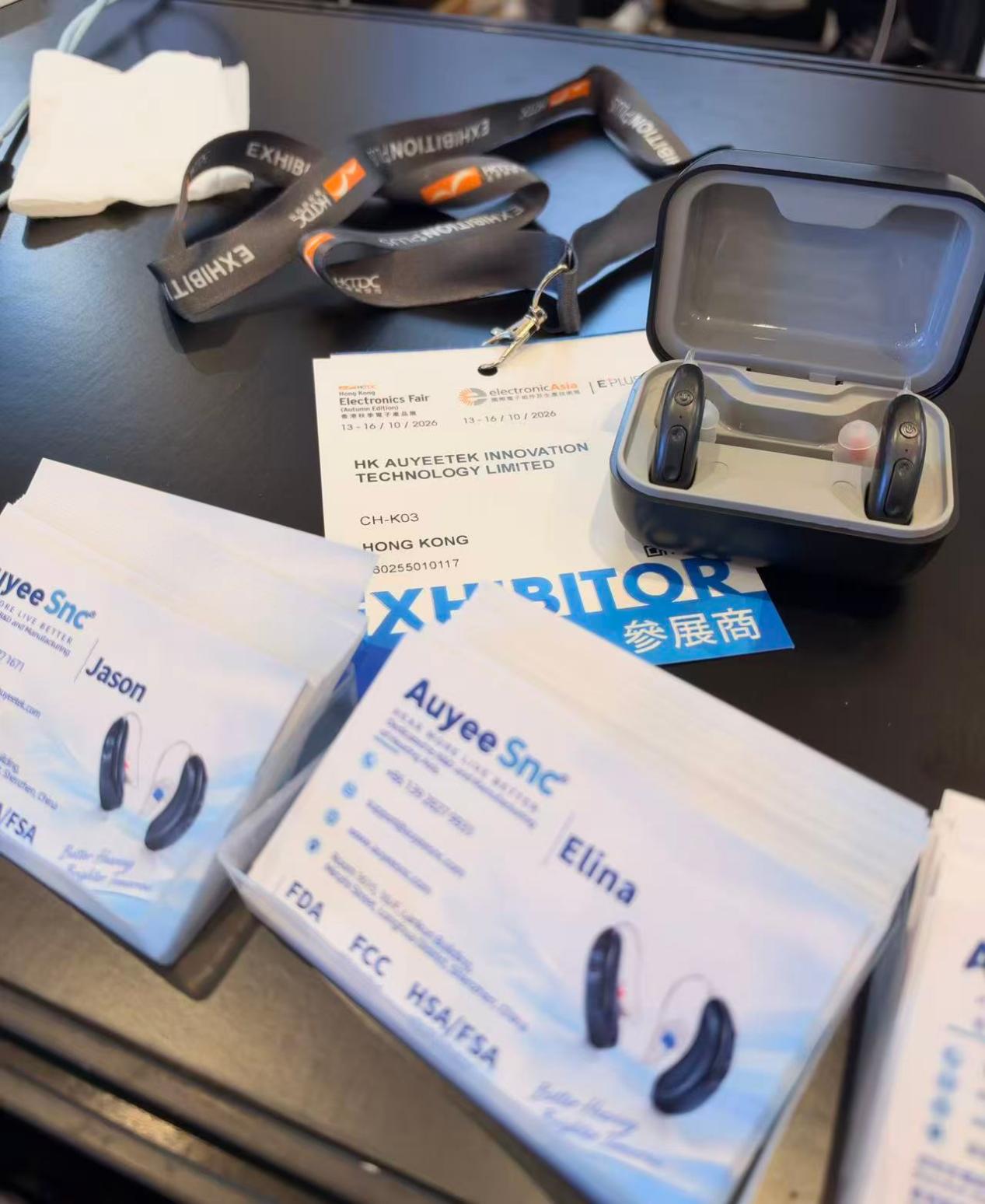
AuyeeSnc currently offers two products, OmniTouch and AirTouch, which feature receiver-in-canal (RIC) and in-the-ear (ITE) designs, respectively, to suit different user preferences.
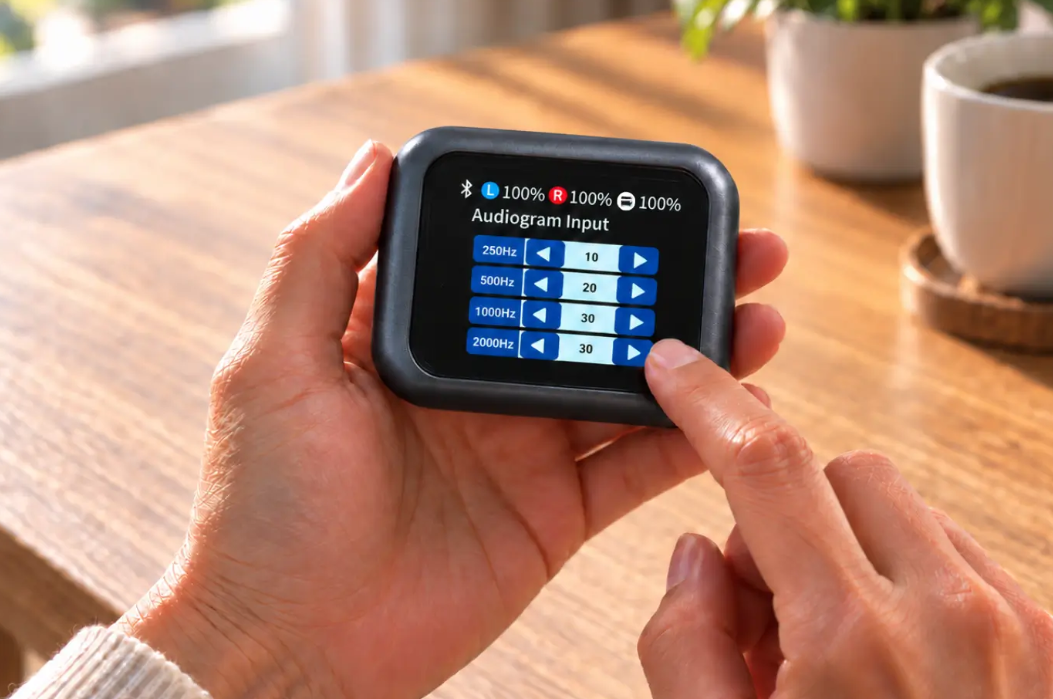
One of OmniTouch’s key features is its touchscreen charging case. Users can enter their hearing test results directly on the case to personalize their hearing aid settings, reducing their reliance on a smartphone app. The product also supports Apple’s Find My network, a function that helps users locate their hearing aids through Apple devices.
AirTouch, meanwhile, features an in-the-ear design resembling wireless earbuds, targeting consumers who place greater focus on appearance and wearing style. Both models support personalized settings based on users’ hearing information, which gives users a more familiar consumer electronics experience when using hearing aids.
For first-time hearing aid users, complicated controls and cumbersome fitting procedures can become barriers to adoption and continued use. AuyeeSnc aims to simplify setup and make initial configuration more straightforward through its touchscreen charging case.
Combining in-house algorithms with third-party translation
Wang said the company has developed several core audio processing algorithms in-house, including wide dynamic range compression (WDRC), noise reduction (NR), speech enhancement, sound environment recognition, and feedback suppression.
WDRC adjusts amplification according to sound intensity to help users perceive sounds at different volume levels. Noise reduction minimizes unwanted background noise, while feedback suppression helps reduce the high-pitched whistling that can occur when wearing hearing aids.
Beyond audio processing, the company is also exploring real-time speech translation. For this feature, however, it relies on iFLYTEK’s speech AI translation platform rather than developing the entire technology stack in-house.
According to the company, the platform uses a streaming, end-to-end architecture combining Conformer and recurrent neural network transducer (RNN-T) models, alongside joint connectionist temporal classification (CTC) and attention-based decoding. It also integrates spatial-domain processing and deep learning-based frequency-domain enhancement, supported by echo cancellation, dereverberation, and automatic gain control.
However, the company has not disclosed quantitative test results for challenging listening environments, such as speech recognition accuracy, noise reduction levels, or performance comparisons across different scenarios. Its specific advantages over traditional hearing aids therefore remain difficult to assess.
Shaping the experience with real-world testing
For consumer hearing aids, everyday usability is just as important as technical performance.
Wang said the company invited content creators and reviewers across different platforms to test its products during the initial launch phase, using their feedback to guide product improvements. Early testing identified a delay in the connection between the first-generation charging case and the hearing aids, which affected access to the case’s touchscreen functions.
The company has since fixed the issue. Users can now access the charging case’s touchscreen functions after taking the hearing aids out of the case and switching them on.
AuyeeSnc primarily targets adults with perceived mild to moderate hearing loss, including both first-time buyers and existing hearing aid users. Consumers can enter information from an existing audiogram or take a hearing test through the company’s companion app, then use the results to personalize their device settings.
The company said its OTC hearing aids in the US market are intended for adults aged 18 and older who perceive themselves to have mild to moderate hearing loss. It recommends that people experiencing sudden changes in hearing, ear pain, or more complex hearing issues seek professional medical care.
Overseas expansion will require product and service readiness
Wang said early feedback on OmniTouch and AirTouch has been encouraging, with some users highlighting sound clarity, background noise reduction, and feedback suppression. OmniTouch was also named a 2026 Hearing Technology Innovator Awards™ Honoree.
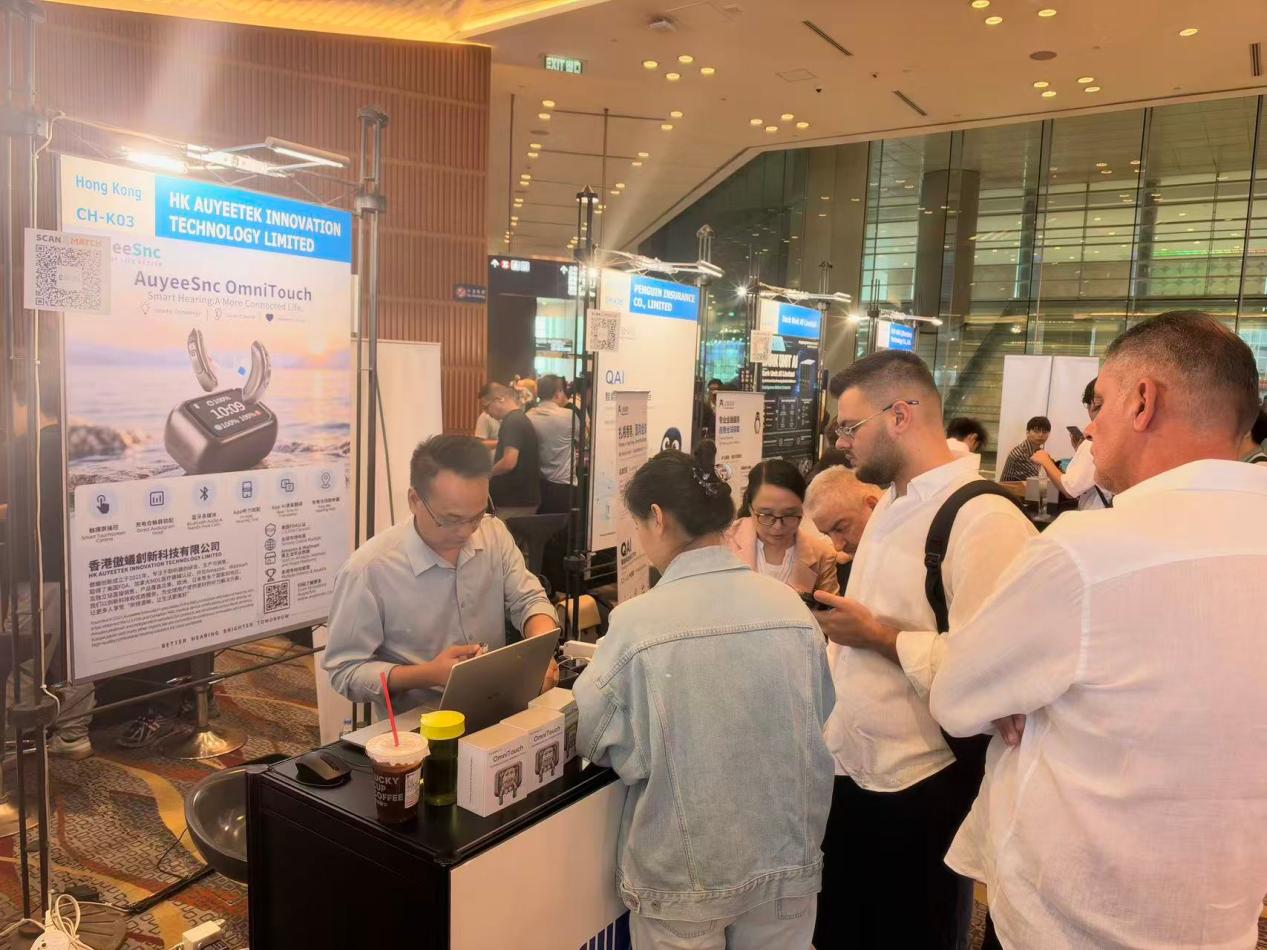
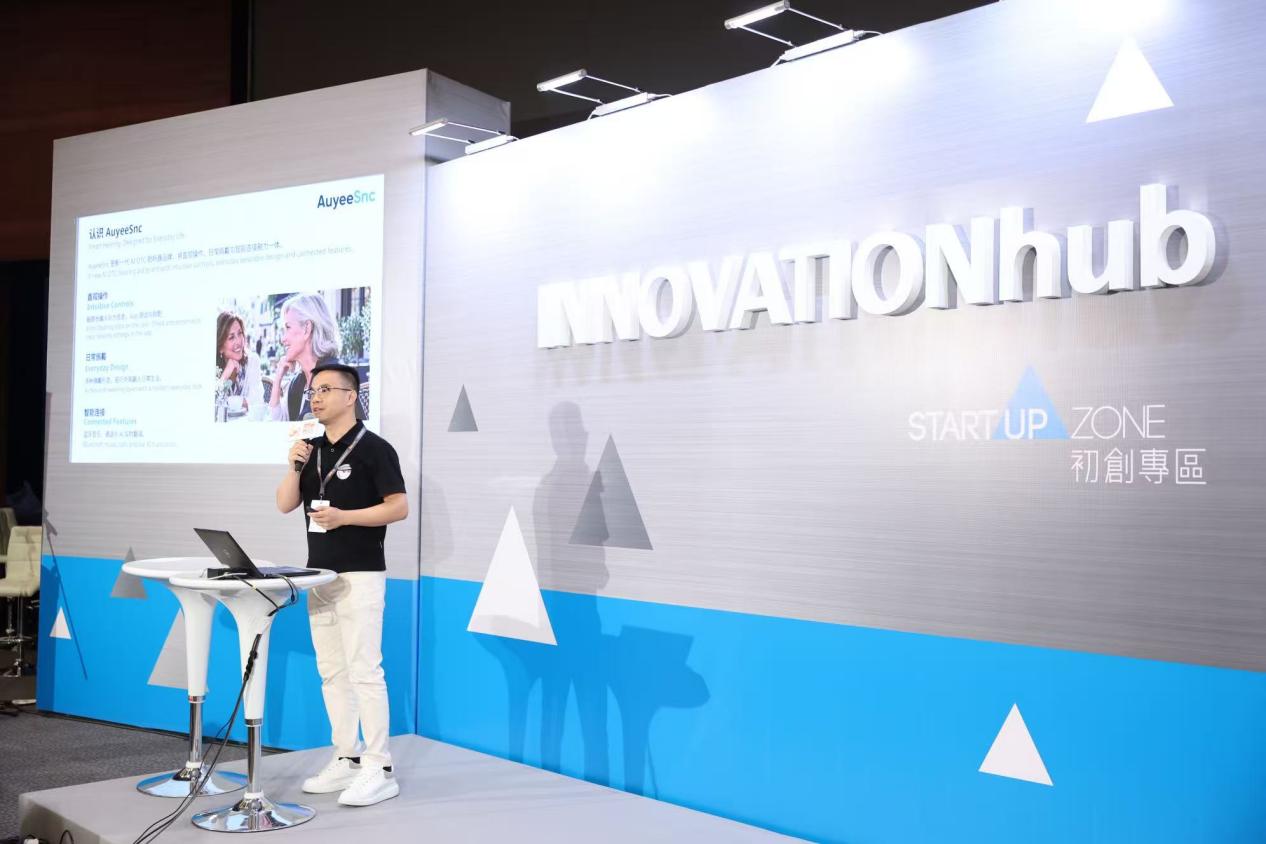
AuyeeSnc also participated in the HKTDC Hong Kong Electronics Fair (Autumn Edition), held from October 13 to 16, 2026, at the Hong Kong Convention and Exhibition Centre. The exhibition brought together electronics companies showcasing products and technologies across consumer electronics and other technology sectors.
North America is currently AuyeeSnc’s primary market. Over the next two to three years, the company plans to gradually expand into Europe and Japan, taking local regulatory requirements and customer support capabilities into account.
For AuyeeSnc, touchscreen charging cases and personalized hearing settings are key product differentiators, while in-house audio processing algorithms and AI translation provide a foundation for further feature development. As competition in the smart hearing device market intensifies, the company’s ability to balance affordability, real-world hearing performance, and ease of use will be crucial to its future growth.