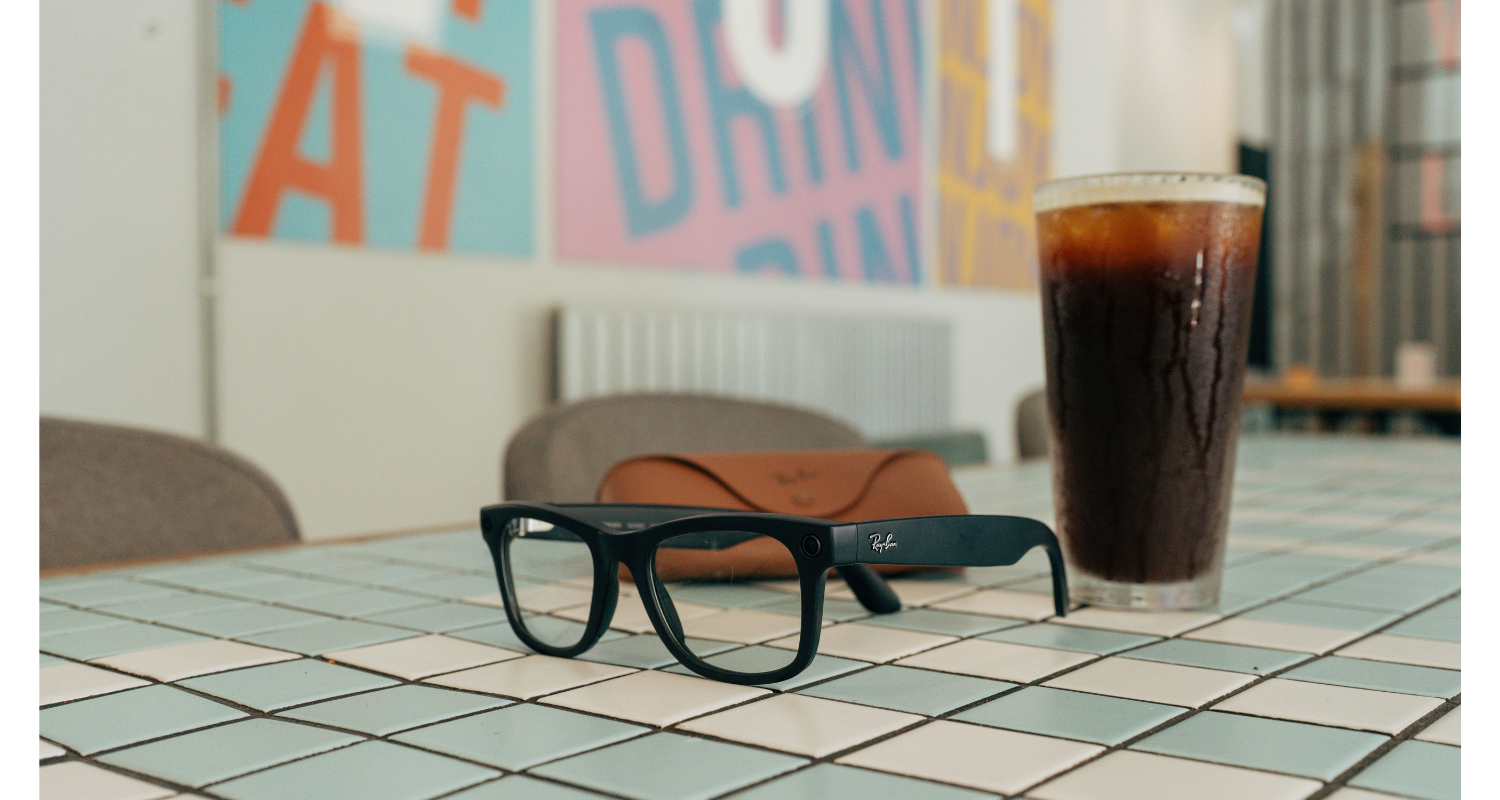

Human social interaction has always operated on multiple channels. Words carry explicit meaning. Tone conveys emotion. Posture signals attention or withdrawal. Eye contact builds trust or asserts dominance. We process these signals simultaneously, unconsciously, and with remarkable sophistication. What happens when another channel is added—when every face-to-face encounter is augmented by a digital layer visible only to those wearing the right device?
AI-powered smart glasses are approaching this threshold. Meta’s Ray-Ban collaboration, Apple’s evolving Vision ecosystem, and emerging competitors from startups and established technology companies are making persistent digital overlay a practical reality. The technology is still early. The social implications are not. The moment two people in conversation can see different information about each other, their environment, and their shared context, the nature of presence itself begins to shift. We are entering an era where social reality is no longer fully shared. It is negotiated, filtered, and potentially manipulated in real time.
The Asymmetry Problem
The most immediate social tension in AI-powered smart glasses is informational asymmetry. One participant in a conversation sees name tags, biographical data, conversation history, and sentiment analysis floating beside the other person’s face. The other sees only a pair of spectacles that reveal nothing. This imbalance fundamentally alters the power dynamics of ordinary interaction.
Consider a business meeting. The executive wearing smart glasses sees real-time analysis of their counterpart’s facial expressions, cross-referenced with previous negotiation outcomes, supplemented by LinkedIn updates and recent media mentions. The counterpart sees a polite professional making steady eye contact. The glasses wearer has a structural advantage that is invisible, unacknowledged, and potentially decisive. Whether this constitutes preparation or deception depends on perspective and disclosure.
Social norms will evolve to address this, but evolution takes time. The transition period—where some participants have augmentation and others do not, where disclosure is optional and detection difficult—creates genuine ethical ambiguity. The person who declines to wear smart glasses in a professional setting may be protecting their privacy or handicapping their effectiveness. The choice becomes a signal in itself, interpreted differently by different communities.
The Intimacy Paradox
AI-powered smart glasses create strange effects at the opposite end of the social spectrum as well. Close relationships depend on shared experience, mutual vulnerability, and the gradual revelation of authentic selves. Persistent digital overlay threatens each of these foundations. When partners can see each other’s calendars, location histories, and social media activity without asking, the friction that generates intimacy disappears. The question “where were you?” becomes redundant when location data is ambient. The surprise gift becomes impossible when purchase histories are visible. The gradual unfolding of a person’s history becomes an instant download.
Some relationships will adapt by establishing explicit boundaries around digital transparency. Couples may negotiate augmentation-free zones, moments where devices are removed and interaction returns to unmediated presence. The negotiation itself becomes a form of intimacy, a mutual acknowledgment that some experiences must remain private to remain meaningful. Other relationships will embrace full transparency, finding new forms of connection in shared data streams and collaborative filtering of experience.
The deeper question is whether augmented intimacy is still intimacy. If a partner’s emotional state is displayed through biometric visualization rather than expressed through words and behavior, does understanding deepen or does emotional literacy atrophy? The technology promises to eliminate misunderstanding by making internal states visible. It may instead eliminate the interpretive work that builds relational depth.
The Public Space Transformation
Social spaces themselves will transform as smart glass penetration increases. A café where half the patrons wear AI-enabled spectacles becomes a layered environment. Historical information overlays the architecture. Reviews hover above menu items. Strangers display selected profile information, creating ambient social possibility that did not exist before. The public sphere becomes a curated experience, different for every observer.
This has profound implications for social cohesion. Shared public reality has historically been a binding force. When citizens occupy the same physical space and observe the same events, common reference points emerge. Augmentation fragmentation risks dissolving this commonality. Two people walking through the same plaza may experience entirely different environments—one sees historical markers and cultural commentary, the other sees advertisements and social connections, a third sees nothing but the physical structure. The public sphere becomes a multiplicity of private spheres, overlapping but never fully aligned.
Urban design will adapt. Cities may develop augmentation-native architecture, buildings designed to be experienced through digital overlay rather than physical form alone. Public art may become dynamic, visible only to certain audiences or changing based on collective behavior. The boundary between physical and digital infrastructure blurs, and with it the distinction between public goods and private platforms.
The Identity Question
Perhaps the most profound social question AI-powered smart glasses raise is about identity itself. We have long maintained multiple identities across contexts—professional, familial, social, intimate. These were managed through context switching, physical movement, and memory. Smart glasses threaten to collapse these boundaries. The same device that displays professional data in a meeting may reveal personal information in a social setting, creating collisions that were previously impossible.
Identity management becomes a continuous, active process rather than a background default. Users must curate what information is visible to whom, in what contexts, under what conditions. The cognitive load of this curation may exceed what humans can manage effectively, creating demand for automated filtering that itself becomes a form of identity expression. The person who chooses to display everything becomes as distinctive as the person who reveals nothing.
Younger users, already accustomed to managing multiple social media identities, may adapt more readily than those who formed their social patterns before digital mediation. But even digital natives face a qualitative shift. Social media identities are performed asynchronously, with time for editing and consideration. Smart glass identity is performed in real time, continuously, with no opportunity for revision. The self becomes a live broadcast, and the anxiety of that condition may reshape social behavior in ways that are difficult to predict.
The Negotiated Reality
The social future of AI-powered smart glasses is not determined by technology alone. It will be shaped by the choices individuals make about disclosure, the norms communities establish around augmentation, and the regulations governments impose on data visibility. The technology makes layered reality possible. Society must decide whether layered reality is desirable.
What seems certain is that unmediated social interaction will become a choice rather than a default. The person who removes their smart glasses to engage in conversation will be making a statement, perhaps one of respect, perhaps one of resistance. The fully augmented interaction will become normal, and with it a new set of social competencies will emerge—reading augmented cues, managing layered information, negotiating shared reality with partners who may be seeing different worlds. The social future of AI-powered smart glasses is not about technology replacing human connection. It is about technology adding complexity to connection, demanding new skills, and raising questions about authenticity that have no simple answers. The layered gaze is here. What we choose to see, and to show, will define the next era of human social life.
Header image from Pexels