

“Tea”, “ghosting” and “salty” are so last year—dive into our guide to rizz up your language game now!
In today’s digital era, the language of Generation Z (people born between 1997 and 2013) is evolving rapidly, blending cultural nuances with messages of authenticity. Forget “red flag” and “slay”; the new wave of Gen-Z slang is here, and it’s packed with both whimsy and depth, meriting a spot in our evolving vocabulary.
It’s not just about looking cool or staying trendy. For marketers, copywriters or anyone aiming to connect with a younger audience, understanding the evolution of Gen-Z language and the popular slang meanings is crucial. Let’s dive into some of the freshest Gen-Z terms that are shaking up everyday chit-chat:
1. Beige flag
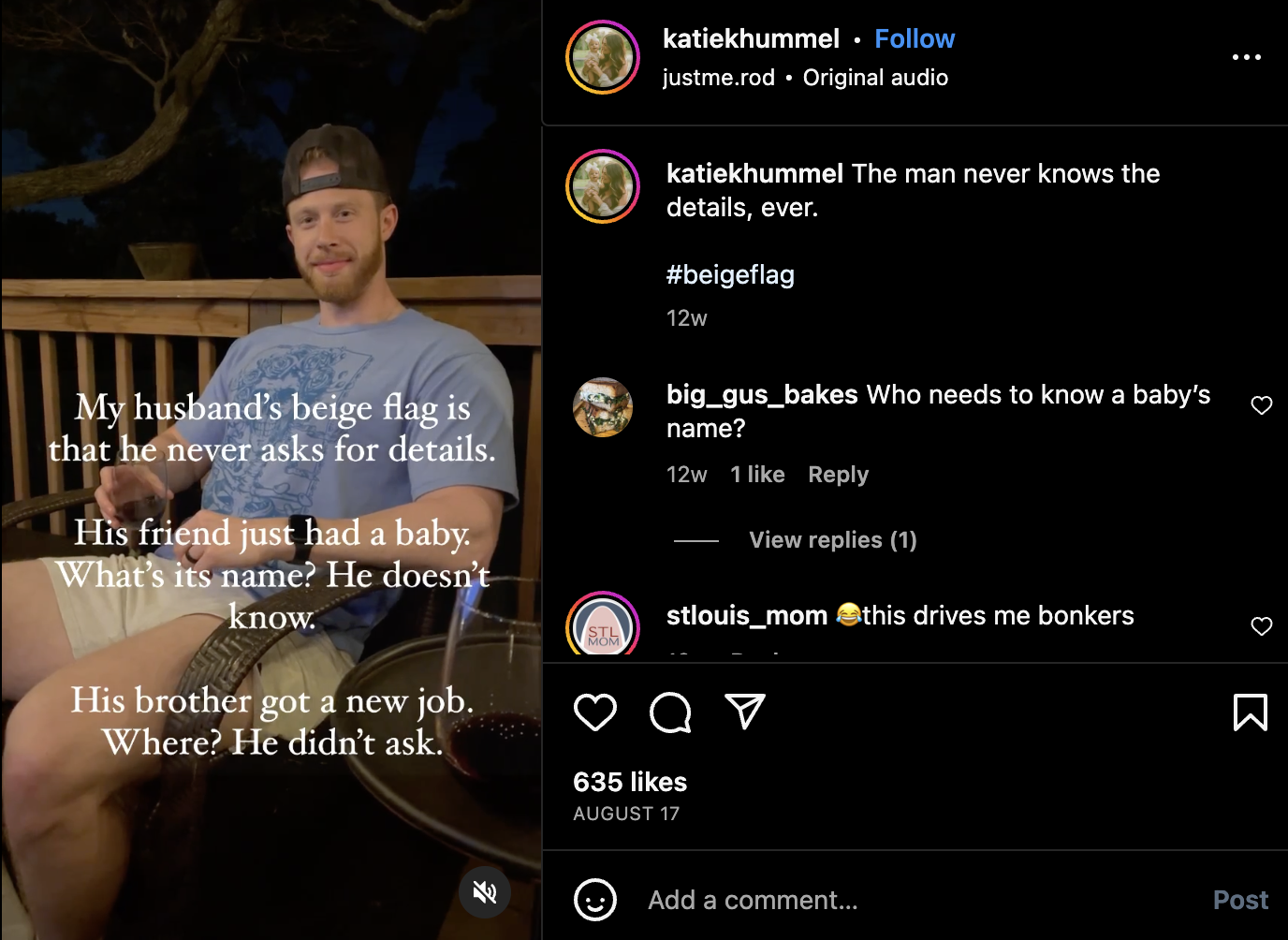
You might be familiar with “red flags” (warning signs) and “green flags” (positive signs). Enter the “beige flag”—a term representing a mix of both. It’s used to describe those traits that make you go, “Hmm”, but not enough to send you running for the hills. As noted by Mia Mercado from The Cut, a beige flag is “neither a dealbreaker nor a dealmaker”. This term is gaining traction on social media platforms like Instagram and TikTok—and even sneaking into dating app bios.
How to use the term “beige flag”:
- My partner’s beige flag is they sleep till late noon and stay awake all night working on their assignments.
- My beige flag is that I save up all my money only to spend it on food whenever I achieve something small.
2. Pink flag
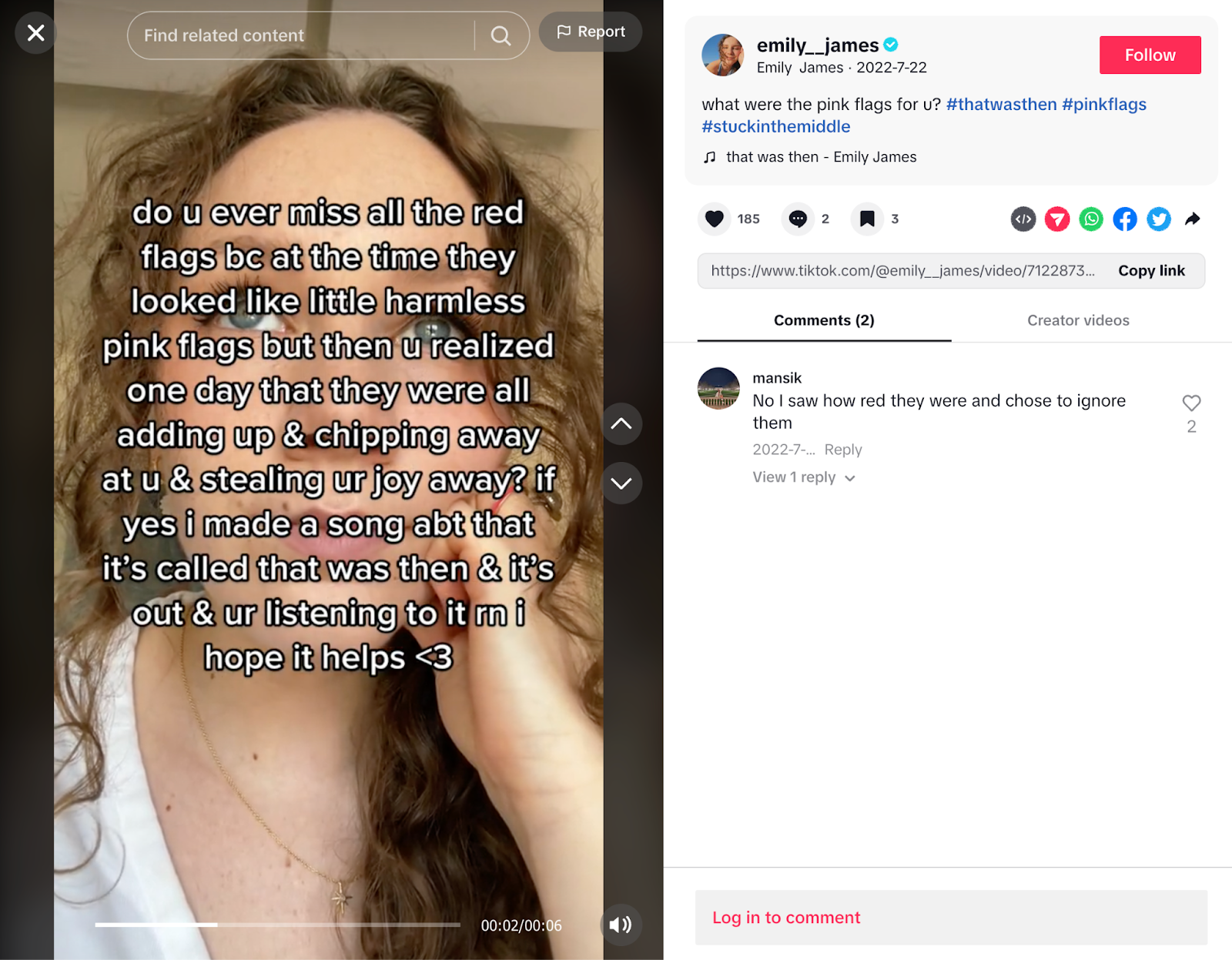
Ever wondered what happens when you water down a red flag? You get a pink flag. These are the sneakier cousins of red flags—not quite as alarming, but still worth a side-eye and a bit more problematic than beige flags. Pink flags are those quirks that make you pause, but not enough to stop you in your tracks. They’re trickier, often sliding under the radar because they’re wrapped in subtlety and subjectivity.
How to use the term “pink flag”:
- John’s charm at first seemed like a win, but his knack for subtle manipulation? That’s his pink flag showing its true colors.
- They looked like #RelationshipGoals on the surface, but dig a little deeper, and you’ll find a pink flag waving over their commitment issues.
3. Delulu & solulu
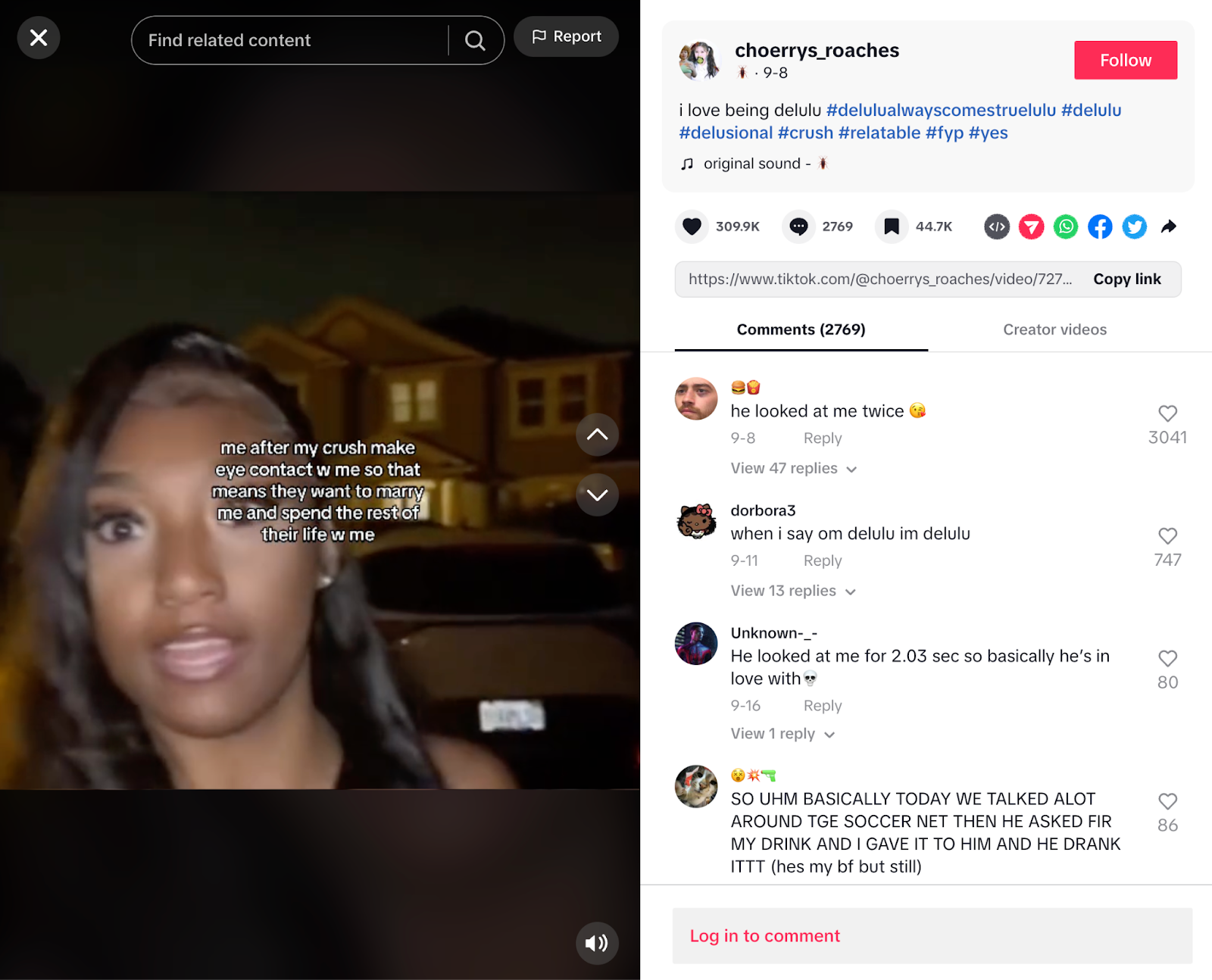
In the whimsical world of Gen-Z slang, “delulu” is your go-to shorthand for “delusional”. It’s the term you drop when someone’s head is in the clouds, blissfully disconnected from the humdrum of reality. Picture this: You’re so lost in daydreams about becoming a pop star that you forget you can’t carry a tune—that’s peak delulu.
But fear not, for every delulu, (hopefully) there’s a “solulu”—a cute, compact way of saying “solution”. Think of it as the lightbulb moment that snaps you back to reality, or that little nudge that gets you back on track.
How to use the terms “delulu” and “solulu”:
- After a week of delulu thinking I’d ace the test without studying, a good old cram session was the much-needed solulu.
- A matcha latte is the solulu to all my morning grumpiness.
4. Delusionship
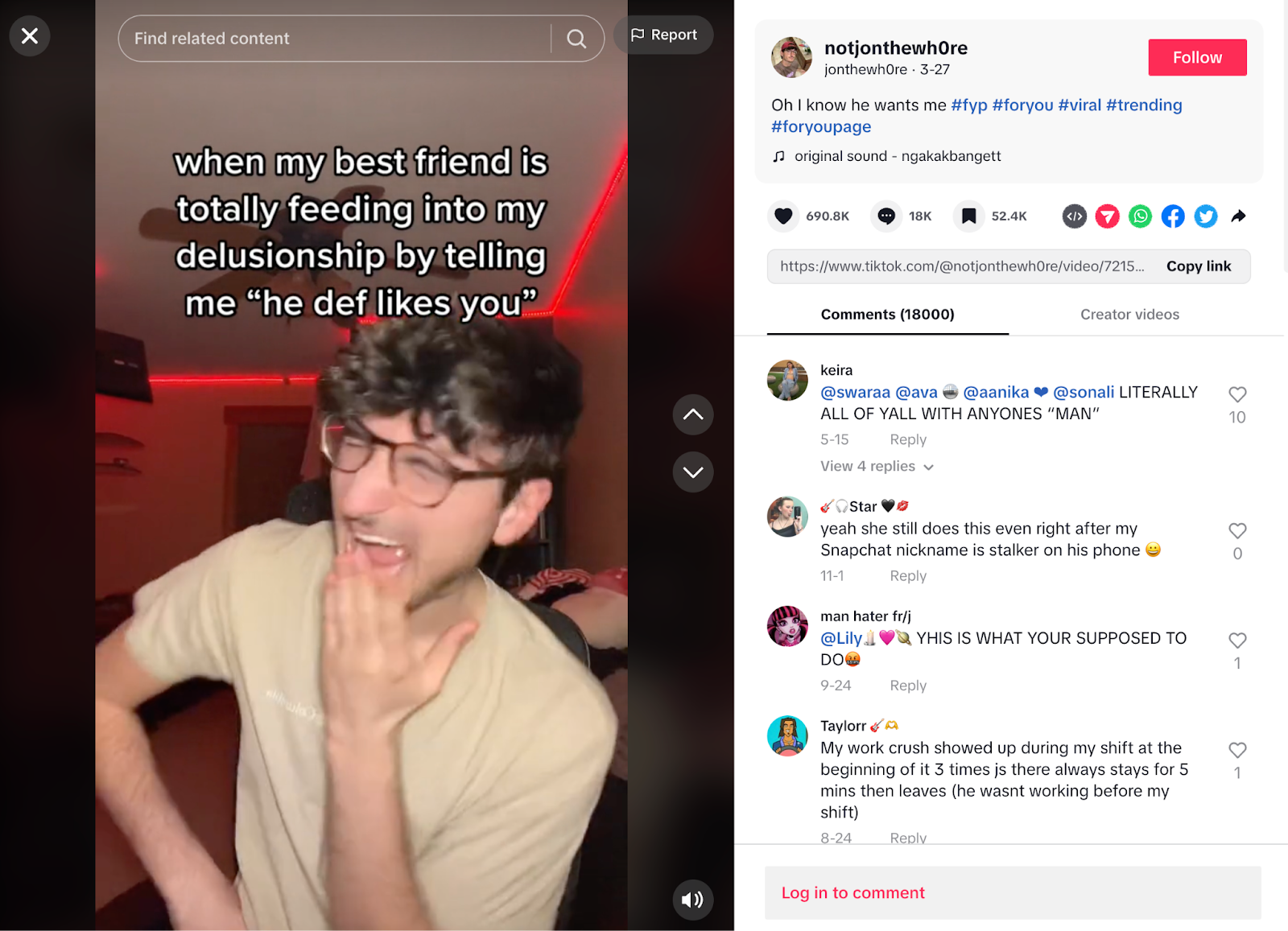
Move over “situationship” (i.e. somewhere between a committed relationship and a friendship), and make room for “delusionship”. It’s the term for when you find yourself in a fanciful romance—like having a mental relationship with a celebrity crush or daydreaming about an unattainable love. If you’re lost in thoughts of passionate escapades with someone who doesn’t even know you exist, congratulations, you’ve entered a delusionship!
Dr. Caroline West, Bumble’s in-house dating expert, defines a delusionship as an infatuation with someone you’re not actually dating. It could be that person you lock eyes with on your daily commute or a match on a dating app you never actually met. It’s about the “what ifs” and “maybes” that fuel your fanciful romantic scenarios.
And guess what? You’re not alone in this world of imaginary love. TikTok is buzzing with over 43 million views for #delusionship, where users share their most whimsical, delulu-driven romantic fantasies. It’s like a virtual confessional for the heart’s playful escapades!
How to use the term “delusionship”:
- My mom can’t comprehend my delusionship with Park Jimin. But tbh, idc.
- You really shouldn’t be judging my delusionship when your dating portfolio is a parade of red flags!
5. Rizz
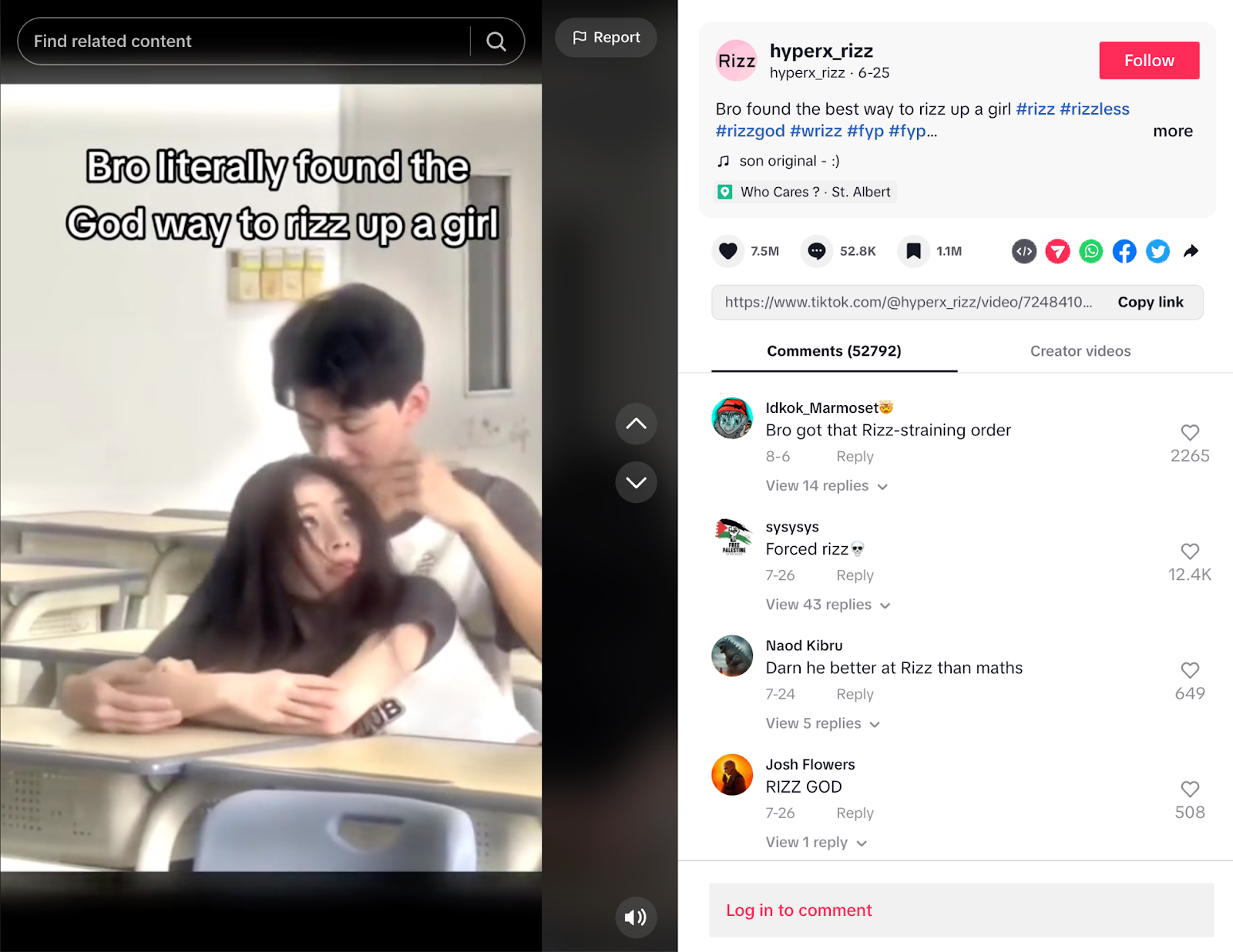
Simping (i.e. someone who tries too hard for another person, especially in a romantic context) is so last season. The latest buzzword in the realm of romance is “rizz”—the art of being effortlessly charming in the game of love, both in words and actions. It’s all about that magnetic allure, the kind that turns heads and wins hearts, without trying too hard.
Coined by YouTuber Kai Cenat in 2021, “rizz” has become the go-to descriptor for someone who’s got that special something in the love department. It’s particularly used to describe guys who have a knack for impressing their crush or date.
Even Hollywood stars like Tom Holland are getting in on the trend. In a BuzzFeed Celeb interview, Holland humorously confessed his lack of “rizz”, saying, “I have no rizz whatsoever. I have limited rizz.” This just goes to show how quickly and widely the term has caught on.
How to use the term “rizz”:
- The guy I went on a date with had some mesmerizing culinary rizz. Just my type!
- Saw Jake practicing his rizz in the mirror before he asked Hailey to prom.
Gen-Z slang is like confetti
These terms are whimsical, fun and a testament to the colorful and ever-changing tapestry of language. They represent a playful, humorous peek into the mindset of a generation that’s rewriting the rules of communication.
Embracing these Gen-Z words and phrases is more than just keeping up; it’s about enjoying the thrilling ride of modern linguistics. From “lit” and “mood” to “no cap”, and the sassy “riyal” (a funny and sarcastic way to say “real”) to the suspicious “sus” (i.e. suspicious), these terms are reshaping how we express ourselves. So, why not join in and sprinkle a little Gen-Z magic into your daily dialogue?
Also read:
Header Image Courtesy by Pexels