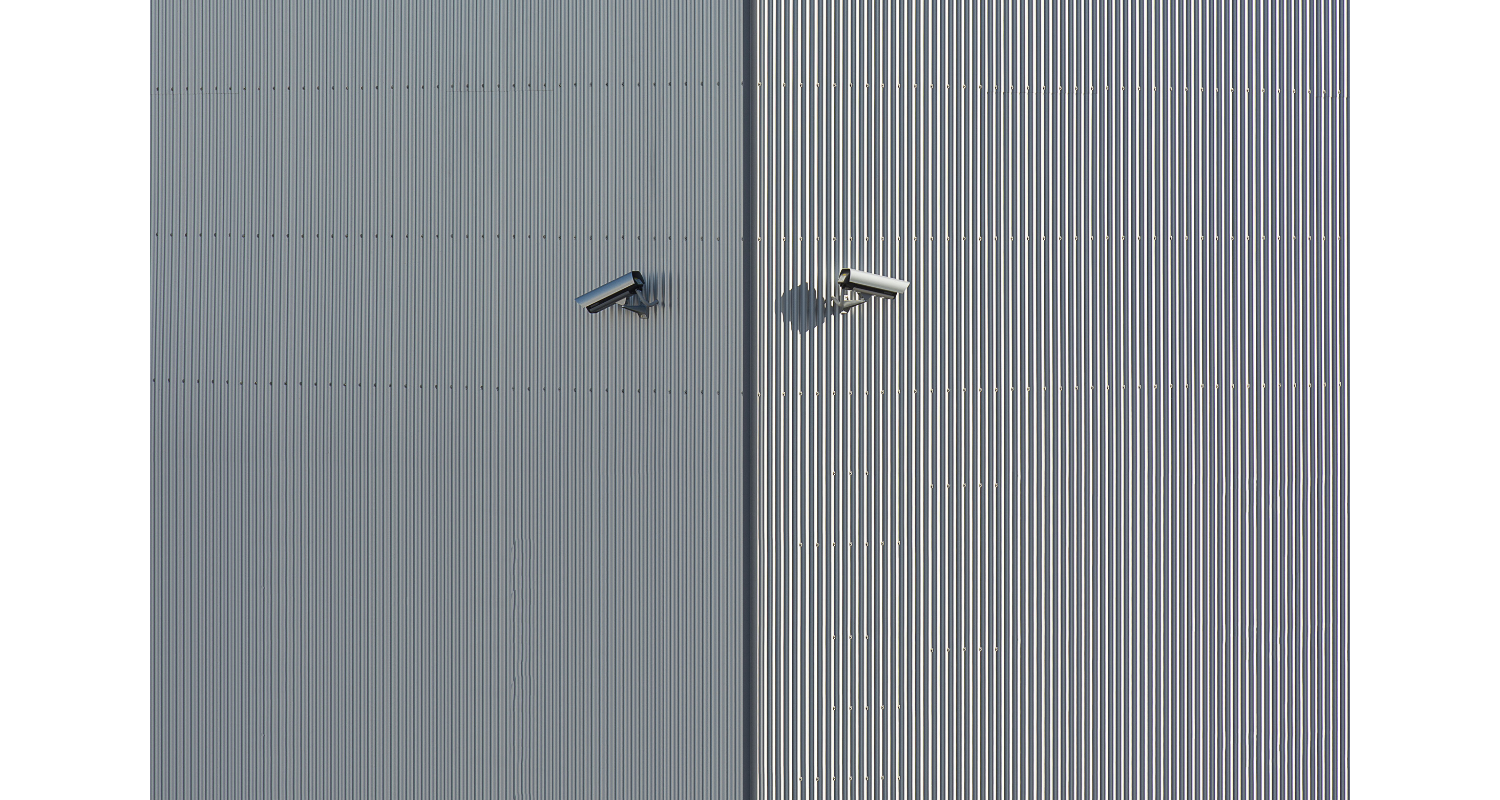

Surveillance has always been a matter of architecture. The panopticon prison, designed by Jeremy Bentham in the eighteenth century, made inmates visible to a central observer while obscuring whether observation was active at any moment. The uncertainty itself produced compliance. Today’s surveillance architecture operates on a different scale and with different mechanics, but the psychological principle persists. We are watched more comprehensively than ever before, and the watching is increasingly automated, ambient, and difficult to perceive.
What distinguishes the current era is not merely the volume of data collection but the intelligence applied to it. Artificial intelligence transforms surveillance from passive recording into active inference. A camera no longer merely captures images; it recognizes faces, interprets gestures, detects anomalies, and predicts behavior. A phone no longer merely tracks location; it infers emotional states from typing patterns, social connections from proximity data, and economic vulnerability from transaction histories. The surveillance apparatus has acquired cognitive capacity, and that capacity is being deployed at every layer of social and economic life.
The Consent Illusion
The dominant narrative around contemporary surveillance emphasizes consent. Users agree to terms of service. They accept cookies. They opt into location sharing for convenience. This framework treats surveillance as a contractual exchange: personal data for service value. The problem is that the exchange is structurally unequal.
Consent in the AI surveillance context is not informed, not revocable, and not meaningful. Terms of service are unreadable by design, updated unilaterally, and accepted through interface friction so minimal that it barely registers as a decision. The data extracted extends far beyond what any reasonable user would consider exchanging. A weather application that requests microphone access, a flashlight utility that demands contact lists, a fitness tracker that sells sleep data to insurance brokers—these are not isolated abuses. They are the business model.
The AI dependency of modern services makes withdrawal impractical. Opting out of surveillance means opting out of employment verification, financial services, social participation, and increasingly physical mobility. The consent framework was designed for discrete transactions between equals. It is being applied to continuous, asymmetrical, and inescapable data extraction. The result is not consent but resignation dressed in legal formality.
The Inference Problem
Traditional surveillance concerned itself with known information. What did a person do? Where did they go? Who did they meet? AI surveillance is concerned with unknown information. What might a person do? Where are they likely to go? Who are they becoming? The shift from recording to prediction represents a qualitative change in the nature of surveillance.
Predictive inference is inherently probabilistic and frequently wrong. An algorithm that identifies a person as a flight risk based on social media sentiment, employment instability, and travel patterns may be correct in a minority of cases and devastatingly incorrect in others. The error is not distributed equally. Inference systems trained on biased data reproduce and amplify existing inequalities. The person flagged as suspicious by an AI system is more likely to be from a marginalized community, not because of greater propensity but because of greater visibility in the training data.
The consequences of inference errors are also asymmetrical. A false positive in fraud detection may result in frozen accounts and damaged credit. A false positive in criminal justice may result in pre-trial detention. A false positive in employment screening may result in permanent exclusion from opportunity. The AI surveillance system does not merely observe. It constructs the reality it claims to detect.
The State-Corporate Symbiosis
Surveillance power has historically been concentrated in either state or corporate hands, with tension between the two. The AI era has produced something different: a symbiosis where state and corporate surveillance capabilities merge, complement, and reinforce each other.
Corporations possess the data infrastructure, the user relationships, and the technical talent. States possess the legal authority, the coercive capacity, and the demand for population-scale monitoring. The exchange is not always explicit. Data brokers aggregate and sell consumer information that finds its way into government databases. Platform companies comply with legal requests that expand in scope and diminish in specificity. AI systems developed for commercial optimization are repurposed for security classification.
This symbiosis is difficult to regulate because it operates across jurisdictions, sectors, and legal frameworks. A privacy law that constrains corporate data collection may be circumvented by government procurement. A government transparency requirement may be undermined by classification regimes. The surveillance ecosystem is designed to be resilient against exactly the kind of institutional accountability that liberal democracies have historically relied upon.
The Resistance Question
What remains is the question of resistance. If surveillance is structural, if consent is illusory, if inference is error-prone, and if state-corporate symbiosis is entrenched, what possibilities exist for meaningful opposition?
Some resistance is technical. Encryption, decentralized networks, and privacy-preserving computation offer partial protections against data extraction. But technical solutions require technical expertise, and their adoption is concentrated among populations already advantaged by education and resources. They do not address the structural conditions that make surveillance the default.
Some resistance is legal. Regulatory frameworks like the European Union’s AI Act and various national privacy laws impose constraints on surveillance practices. But law moves slowly, enforcement is uneven, and regulatory capture is common. The organizations best positioned to comply with complex regulations are often the ones with the most sophisticated surveillance operations.
The most durable resistance may be social and cultural. Norms around surveillance—what is acceptable, what is stigmatized, what is expected—are still forming. The generation now entering adulthood has grown up with pervasive monitoring and is developing distinctive attitudes toward privacy that differ from their predecessors. Whether these attitudes translate into collective action or merely individual coping strategies remains uncertain.
What is clear is that surveillance in the age of AI dependency cannot be addressed through any single mechanism. It requires technical innovation, legal reform, institutional accountability, and cultural transformation operating in concert. The architecture of watching is being built around us. The question is whether we can build the architecture of resistance with equal sophistication and greater determination.
Header image from Pexels