[HK Special Report] NASDAQ-listed Prenetics’ Danny Yeung on building a global health brand
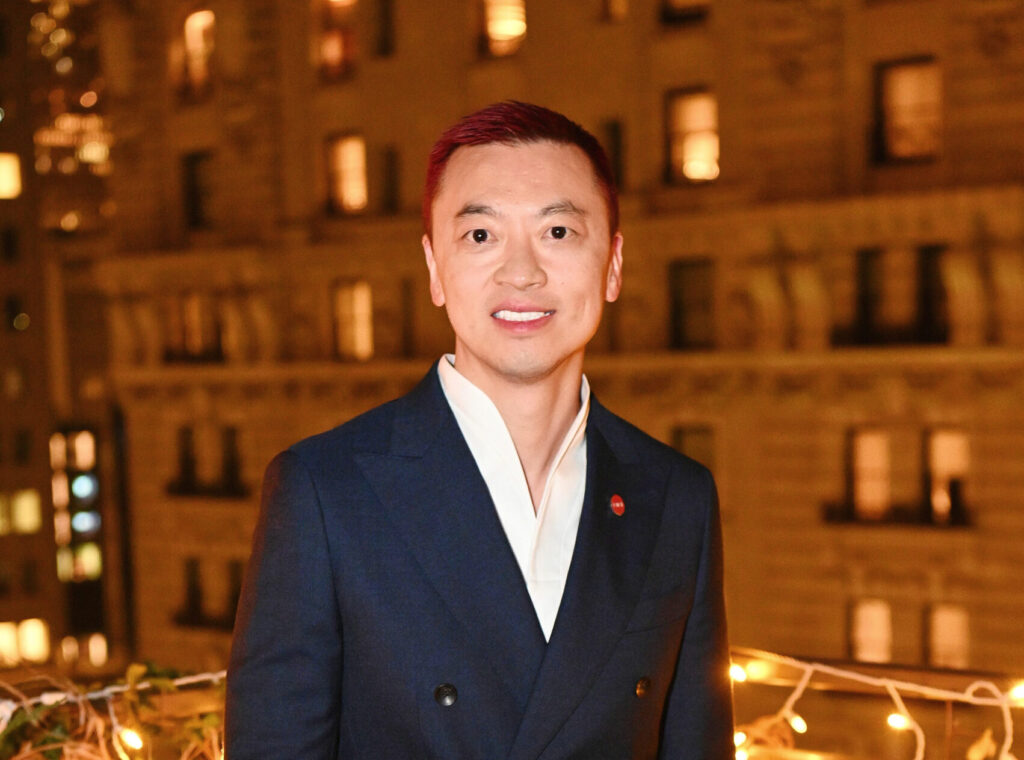
Editor’s note: This article by Yimie Yong was originally published on TNGlobal on November 3, 2026, as part of its HK Special Report series examining Hong Kong’s technology ecosystem. It is republished here by Jumpstart.
Hong Kong-headquartered Prenetics is making a decisive shift from health sciences and diagnostics towards consumer wellness, with its IM8 brand emerging as the centrepiece of its next growth chapter. Launched in December 2024 with football icon David Beckham, IM8 has grown rapidly, becoming the company’s primary revenue driver and prompting a broader strategic refocus on the consumer health market.
For Co-Founder and CEO Danny Yeung, the shift reflects a fundamental lesson from more than a decade of building health technology businesses: scientific innovation creates the greatest value when it becomes part of people’s everyday lives. With IM8 targeting projected revenue of $220 million to $230 million, Prenetics is now focused on building a globally recognised consumer health brand, expanding its product portfolio and deepening its presence across key international markets.
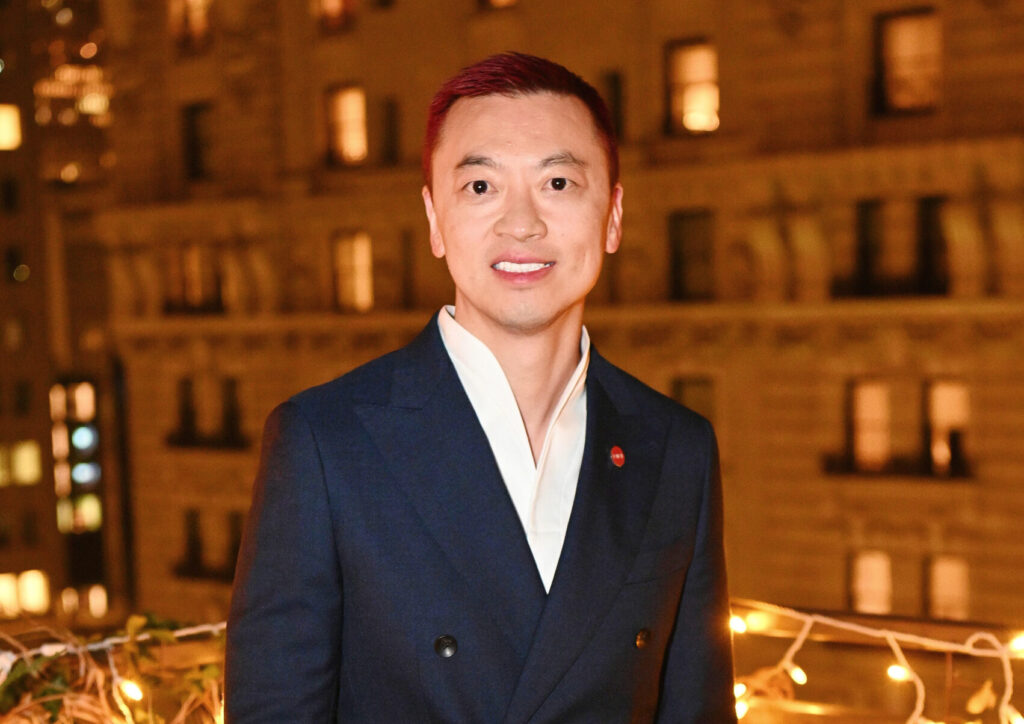
In this interview with TNGlobal for its Hong Kong Special Report series, Yeung discussed Prenetics’ transformation, the challenges of scaling IM8 internationally and the company’s plans to tap growing demand for premium wellness products in Southeast Asia. He also shared on Hong Kong’s evolution as a startup hub. He opined that while the city offers a strong launchpad for entrepreneurs, founders must think beyond its relatively small domestic market if they aspire to build global businesses.
Below are the edited excerpts:
Prenetics began as a health sciences company and has since shifted its focus towards consumer health, particularly through IM8. What prompted this strategic change, and what did you learn about where the company could create the most value?
We started Prenetics in 2014 because we believed science could change how people take care of their health. That belief hasn’t changed. What changed is where the value is.
Over 10 years we built genetic testing, ran one of the largest COVID testing operations in Hong Kong and the UK, and invested in early cancer detection. The lesson was that great science doesn’t matter if it can’t reach consumers at scale with a business that compounds. Diagnostics is episodic. You test once. Daily health is a habit, and a habit is a recurring relationship with a customer.
IM8 is where the science and the consumer meet. We launched in December 2024 with David Beckham. Within about 18 months it became the vast majority of our revenue. When something works that clearly, you don’t hedge. You focus. So we simplified the company and put everything behind IM8.
Prenetics has planned new products across hydration, creatine and children’s gummies. How will these launches fit into IM8’s broader strategy, and how will you decide which product categories to enter next?
IM8 is not a supplement company with a long catalogue. It’s a brand built around one standard: premium ingredients, science-backed formulation, third-party testing, and athletes and people who actually use the product. Every new product has to meet the same bar as Daily Ultimate Essentials, or we don’t launch it.
Hydration launches quarter 1 in 2027. Gummies follow in the first half of 2027, including for kids and adults.
Our filter for new categories is simple. Is the category big and growing? Is there a real quality gap we can close? Does our existing customer already buy it somewhere else? If the answer to all three is yes, we can win. If we’re just adding SKUs for the sake of it, we’re diluting the brand.
What are the biggest challenges in scaling IM8 from a fast-growing brand into a sustainable, globally recognised consumer health company? How will you measure success beyond revenue growth?
The biggest challenge is staying focused while growing this fast. When you go from zero to a projected $220 to 230 million in revenue in under two years, every week brings a new opportunity: new markets, new partners, new products. Most of them are distractions. Saying no is the hardest discipline.
The second challenge is talent. Building systems, finance, supply chain and compliance that work across 40+ countries is harder than building the brand.
Revenue is the scoreboard, not the game. What I watch most is whether customers keep taking the product every day. Retention and repeat purchases tell you if you’ve built something real. We’ve delivered more than 43 million servings since launch. That number matters more to me than any marketing metric, because it means people are building a habit. I also watch gross margin, because a brand that can’t make money at scale isn’t a brand.

IM8 recently announced its partnership with the NBA in Australia and Southeast Asia. How do you plan to use this partnership to accelerate growth in the region, and which markets are your priorities?
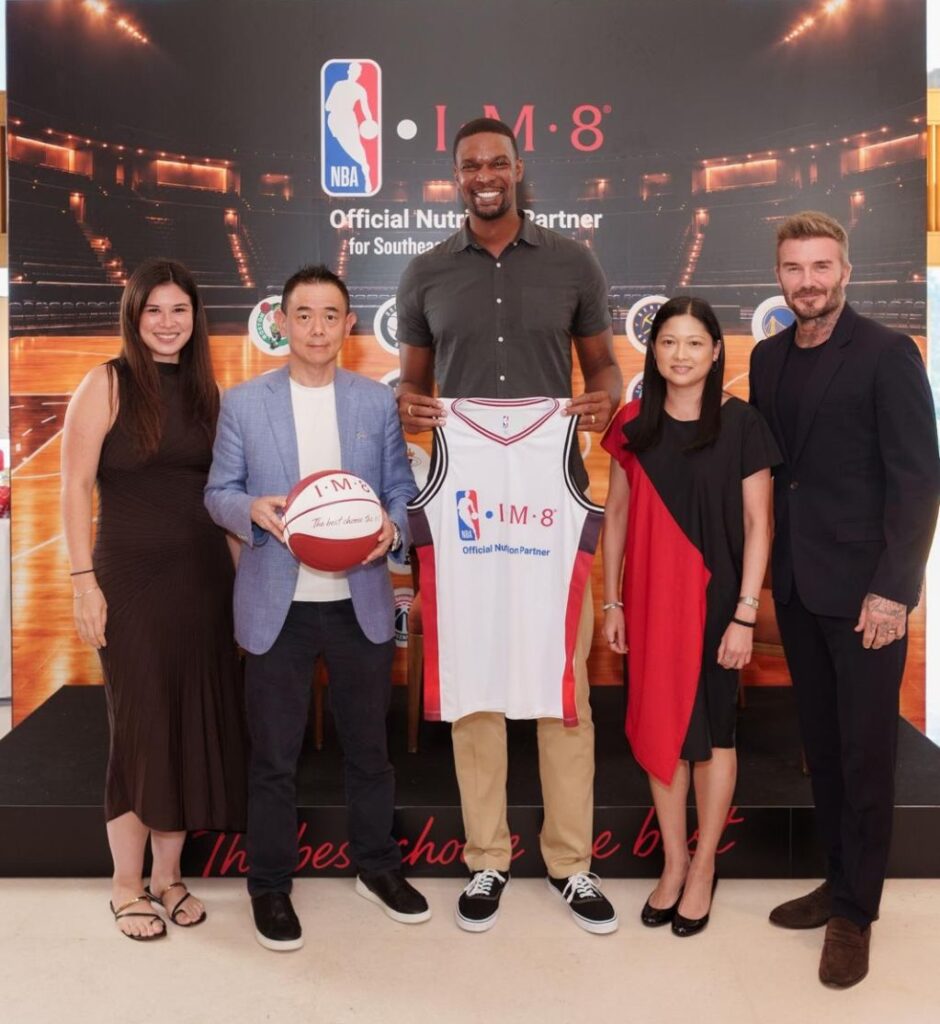
The NBA gives us credibility and reach with roughly 660 million people across Australia and eight Southeast Asian markets. Basketball fans are young, digital and increasingly health-conscious. That’s our customer.
But a logo by itself doesn’t sell anything. The value comes from what we build around it: localized campaigns, fan experiences, the NBA House activation in 2027, and athletes who genuinely use the product.
Australia is already one of our strongest markets, so that’s where we push hardest first. In Southeast Asia, Singapore, Malaysia, the Philippines and Indonesia are the priorities. They combine big basketball audiences, rising demand for premium wellness, and e-commerce infrastructure that lets us move quickly. We’ll go deep in a few markets before we spread thin across all nine.
As a Hong Kong-founded business operating globally, what functions or capabilities should remain close to home, and which are better developed in major markets such as the US?
Strategy, capital allocation and the culture of how we operate stay close to me and my core team. A lot of that is still in Hong Kong. Hong Kong is also a great base for operations, finance and supply chain coordination across Asia.
But you can’t build a US brand from Hong Kong. Our retail, finance and regulatory functions sit in the US, run by people who live in that market. We hired a US CFO for exactly that reason. The same applies everywhere: the people closest to the customer should make the customer decisions.
My rule is to centralize standards and decentralize execution. The product standard, brand and values are the same everywhere. How you win in Sydney is different from how you win in New York.
You have built businesses in and beyond Hong Kong. From your experience, how has Hong Kong’s technology and startup ecosystem evolved, and what has changed most significantly?
I moved to Hong Kong in 2010 to launch uBuyiBuy, a group buying site. At that time there was no tech ecosystem to speak of. Even e-commerce wasn’t really a thing here. People shopped in malls, not online. Almost everyone told me group buying would never work in Hong Kong.
They were wrong, and it taught me the lesson I still live by: if you build a strong product that solves a real problem, people will come. At one point we had 2 million email subscribers in Hong Kong alone, in a city of about 7 million people, and we became the largest e-commerce company in the region. Groupon then acquired us.
Today it’s a completely different place. There are tech founders everywhere: fintech, AI, biotech, consumer brands. You have HKSTP and Cyberport, the HKEX listing reforms, much deeper pools of capital, and most importantly, a generation of founders who have built and exited companies and are now investing in and mentoring the next wave. That flywheel didn’t exist in 2010.
What still needs to change is ambition. Too many startups here still build for Hong Kong first. Hong Kong is an incredible launchpad, but with 7.5 million people it can’t be the whole plan. The founders who win will be the ones who use Hong Kong as a base and build for the world from day one.
How has being an entrepreneur in Hong Kong shaped your business philosophy? What advantages and limitations have you encountered while building a company from the city?
Hong Kong taught me speed and resourcefulness. This city doesn’t wait for anyone. When COVID hit, we went from a genetics company to running large-scale testing in a matter of weeks. That instinct to move fast and figure it out is very Hong Kong.
The advantages are real: a strong financial system, access to capital, proximity to manufacturing and supply chains in Asia, and a truly international mindset. Hong Kong people are comfortable across cultures, which matters a lot when you’re building a global brand.
The limitations are also real. The home market is small, so you’re forced to go global early, which is painful at first. And talent for consumer brand building at global scale is still thin, so you have to build that capability outside the city. I see that limitation as a gift. It forces you to think global from day one.
For entrepreneurs in Hong Kong who aspire to build global companies, what do you think they most often underestimate about competing internationally?
How hard it is to win in the US. Many founders think a good product plus some funding is enough. The US is the most competitive consumer market in the world. Customers have endless choices, the cost of acquiring them is brutal, and regulation and scrutiny are intense.
You need three things. First, real credibility. For us that came from science and from partners like David Beckham who co-founded IM8 with me. Second, local teams who understand the market better than you do. Third, the stamina to be wrong many times before you’re right.
The other thing founders underestimate is that you can’t be half in. If you want to be global, you have to commit people, capital and your own time. You can’t test the US from a desk in Hong Kong.