
XREAL Makes Google’s Smart Glasses Dream Real
Google has been here before.
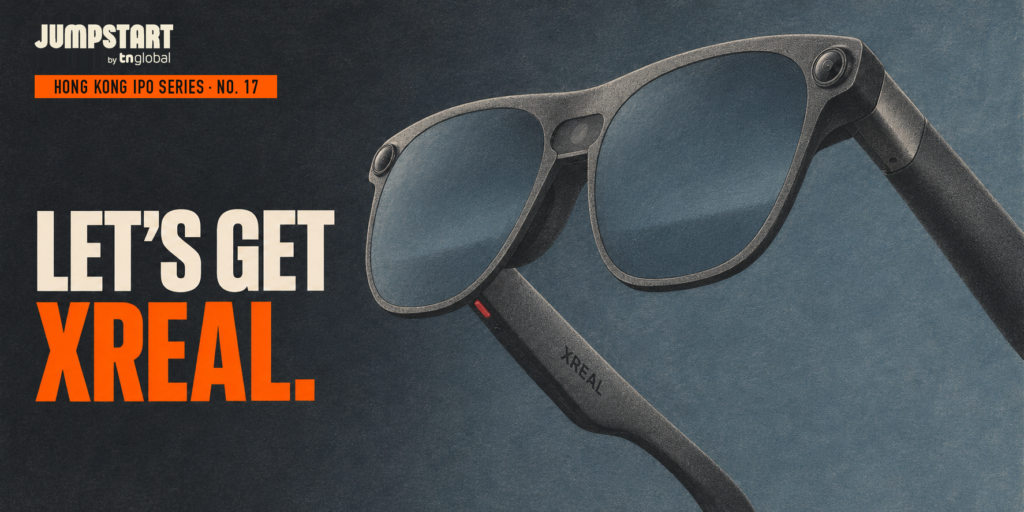
More than a decade ago, Google Glass promised to put the internet in front of your eyes. Now Google is trying again, with Gemini, a new operating system and a Chinese company making the glasses. In October, it opened orders for XREAL Aura, a pair of wired glasses running Android XR. They look rather more like sunglasses than the headsets that have so far carried the promise of spatial computing.
For XREAL, which filed for a Hong Kong listing in April, this is an unusually prominent place to find itself. Google supplies the software and AI. Qualcomm supplies the main processor. XREAL supplies the part people actually have to put on their faces.
A Cinema on the Nose
XREAL had been working on that last problem for years before Google came calling.
Founded by Chi Xu in 2017 as Nreal, the company introduced its Light glasses at CES in 2019. It later found a more immediately understandable proposition in its Air range. Plug the glasses into a compatible device, put them on, and watch a large virtual screen. Your phone could stay in your pocket. The screen could fill your view.
That gave people something to buy without first asking them to embrace a new way of computing. A film was still a film. A game was still a game. The screen had moved.
It also gave XREAL a practical engineering education. A display a few centimetres from the eye has to appear comfortably far away. The picture needs to remain visible as the wearer adjusts the glasses. Weight, heat and the fit of the nose pads become things a customer notices long before they ask about the operating system.
The company kept taking on more of that work itself. It established an optical-module factory in Wuxi and developed its own display technology. With the One series, it introduced the X1 chip, which handled spatial-display functions inside the glasses. A screen could be anchored in place while the wearer turned their head. That made the device more useful across phones, computers and gaming handhelds, without requiring each one to do all the work.
By the time Aura arrived, XREAL had experience selling glasses to people who expected them to work with devices they already owned. Its next product would ask those people to buy a computer as well.
Google in the Other Pocket
The computer comes on a cable.
Aura connects to a separate computing unit that holds the main processor and battery. Keeping those components off the face helps the glasses stay relatively light. It also means the owner has another object to carry, charge and control.
The division of labour extends to the companies behind it. XREAL describes Aura as a collaboration bringing together its lightweight hardware, Google’s Android XR and AI, and Qualcomm’s processors. The appeal for Google is visible in the product. It gets a way to put its software into glasses built by a company that has already spent years persuading consumers to wear displays.
For XREAL, Android XR brings an operating system around which developers can build. Its earlier glasses could make an existing screen look enormous. Aura lets applications occupy the space around the wearer, with cameras and hand tracking helping them interact with it.
Gemini adds another possibility. In one recent review, a writer asked the assistant to identify collectibles on a shelf and discuss their value. The same assistant helped explain how to arrange virtual windows. Google’s software could see both the room and what the wearer was trying to do inside the device.
This is also why overseas coverage has placed XREAL alongside much larger names. An October comparison put its glasses beside Meta’s forthcoming device. Readers were being asked to consider which approach might make a computer on the face tolerable. XREAL had become one of the companies offering an answer.
Please Wave Again
The first reviews suggest that making the computer tolerable and making it easy to operate remain separate jobs.
Reviewers have praised Aura’s displays and the comfort of wearing glasses in place of a larger headset. The trouble often starts when they try to tell it what to do. One assessment highlighted unreliable gestures, heat and frustration with the computing unit. Another pointed to the limited selection of applications that make full use of the device.
These are awkward problems for any single company to solve. XREAL can improve the optics and the fit. Google can improve the operating system and give developers better reasons to build for it. A customer wearing Aura experiences all of those decisions at once. They see a window, reach for it, and expect it to respond.
That makes the Google partnership both a substantial advance for XREAL and a change in what its customers will judge it on. Selling a portable display meant delivering a good picture. Selling Aura means delivering a place where people can watch, work and move between applications.
The company is seeking public capital as that expansion reaches consumers. It reported 2025 revenue of RMB516 million in its listing application, with more than 70% of sales coming from overseas. XREAL already had a business beyond China before Google’s software arrived in its glasses. Now the partnership gives that business a larger ambition—and a longer list of things that have to work together.
Google has brought the assistant. XREAL has made room for it on the face. The next time a wearer reaches for a floating window, both companies need it to stay within reach.